Locksmith services are always 10% off for seniors.
Open Mon–Thu 8:30 AM–9 PM, Fri 8:30 AM–4 PM, Sun 9:30 AM–9 PM
Locksmith services are always 10% off for seniors.
Open Mon–Thu 8:30 AM–9 PM, Fri 8:30 AM–4 PM, Sun 9:30 AM–9 PM
GTA Lockman Mobile Locksmith Services · Toronto & GTA
Decide which internal rooms need their own access, and how that is recorded and reviewed.
Related services
Review what the departing employee could open, then rekey the affected cylinders and issue new keys with a record.
Learn moreStore, label and log keys so the set still makes sense after three staff changes.
Learn moreHow a controlled keyway limits copying, what it costs in flexibility, and when an ordinary cylinder is enough.
Learn moreSeparate stock, cash and staff areas so that a key to one is not a key to everything.
Learn moreHow commercial lock and door work gets scoped, authorized and scheduled around a business that has to keep trading.
Learn moreLock and door service for offices, shops and managed properties. Plan access around the way your business operates.
Learn more
Most businesses secure the front door and the back door and stop there. Inside, the server cupboard, the records room, the stockroom, the manager's office and the electrical room often sit behind ordinary passage latches, or behind doors that lock with a key half the staff have copies of.
Those internal rooms are where the real value usually sits: the equipment that runs the business, the files that hold other people's information, and the stock and cash that can walk out of the door. Deciding which of them need their own access, and how that access is controlled, is a separate job from securing the perimeter.
Start with what is inside each room and who genuinely needs to go in.
A server or network cupboard usually needs access for one or two people and an outside IT provider. A records room holding client or patient files needs access for the staff who handle those files and nobody else. A stockroom needs access for the staff who receive and pick stock. An electrical or mechanical room needs access for maintenance and, in an emergency, the fire service.
Once the list is written down, it becomes clear which rooms need a lock of their own, which can share a key, and which can stay on a passage latch.
Internal doors can take several lock functions, and the choice matters as much as the lock itself.
A storeroom function keeps the outside handle locked at all times, so the door relocks every time it closes and can only be opened from outside with a key. It suits rooms that should never be left open by accident.
An office function lets the person inside lock or unlock the outside handle with a button or turn, and opens from inside at any time. It suits offices that are sometimes open and sometimes locked.
A classroom or entrance function is locked and unlocked from outside with a key, which suits rooms where the key holder decides when the door is open.
On any room people work in, the inside handle should always release freely, so nobody can be locked in.
For a small business with a handful of internal rooms, keyed locks on a master key system are usually enough. Each room has its own key, managers hold a key that opens all of them, and staff hold keys only to what they need.
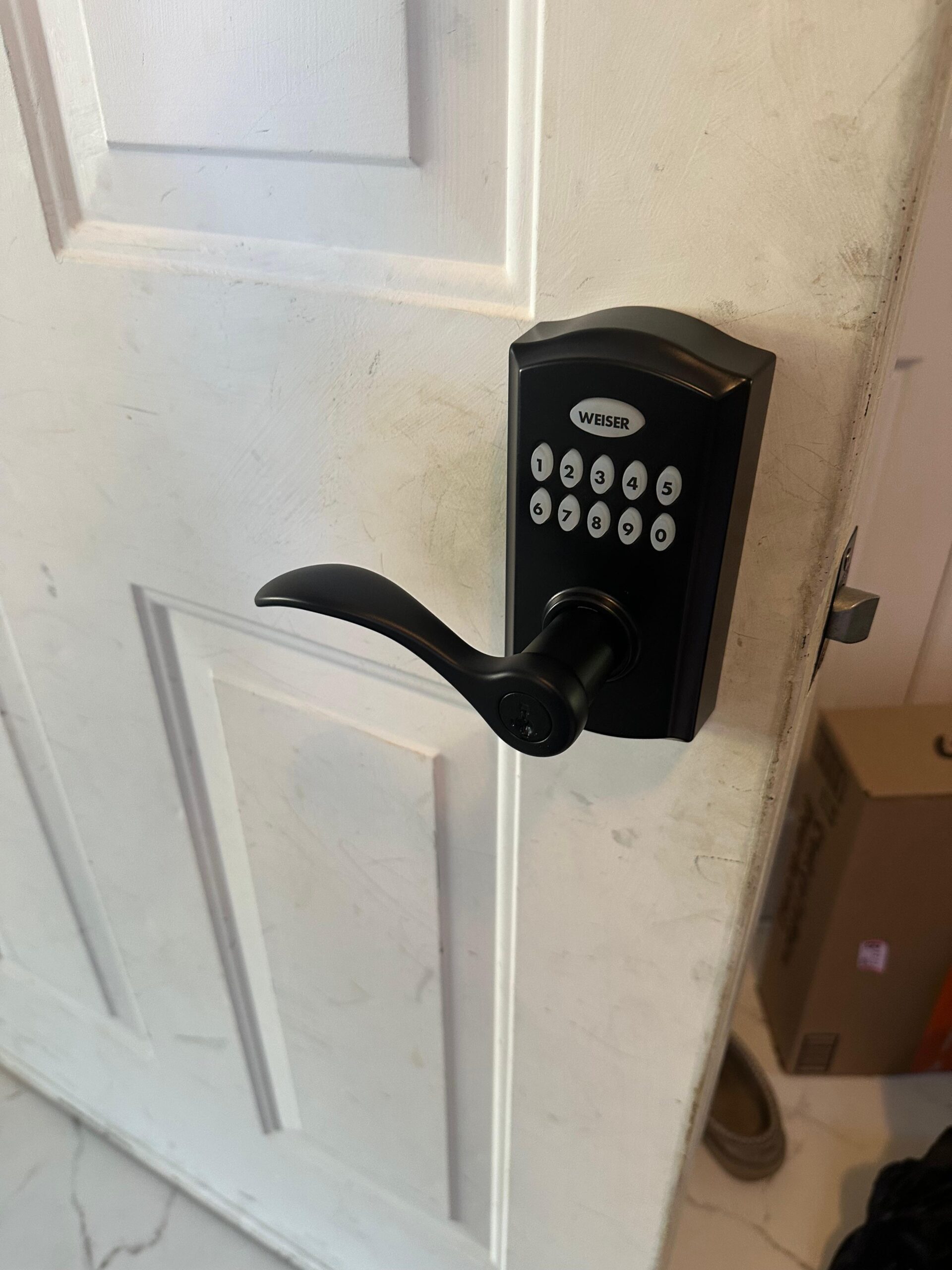
Where access changes often, or where you need a record of who went in, electronic access such as card readers or keypads can be added to particular doors. They cost more and need power and maintenance, but access can be granted and removed without collecting keys.
Whichever approach is used, controlling copies matters. Ordinary keys can be copied at any hardware counter; restricted keys and do-not-duplicate systems mean the keys you issue are the only keys that exist.
A server cupboard has particular needs. It usually needs ventilation, so the door may be louvred or fitted with a vent, which affects what lock can be fitted. The IT provider often needs access outside business hours. And the equipment inside can generate heat, so the door should not be propped open to cool it.
A storeroom-function lock on a solid-core door, with keys held by the business owner and the IT provider, suits most small server cupboards. Where the provider changes, the key or code should change with them.
Where a business holds information about clients, patients or employees, the law and professional bodies may expect it to be secured. That usually means a locked room or locked cabinets, with access limited to the staff who need it.
We cannot advise on what your particular obligations are, but we can fit the hardware that meets them once you know. Rooms holding records should not share a key with general storage, and the key register should show exactly who holds the records room key.
Retail stockrooms and cash offices are covered in more depth in retail stockrooms and cash office locks. The principle is the same: separate the areas so that a key to one is not a key to everything.
Internal locks only help if the keys are controlled. A register showing who holds each internal key, a lockable cabinet for spares, and a clear process when staff leave are what keep the arrangement meaningful; see key cabinets and managing many keys.
When someone with access to a sensitive room leaves, their keys come back on their last day, and anything missing is dealt with through rekeying after an employee leaves.
Internal doors on fire separations, such as electrical rooms and some corridor doors, may be fire-rated. Hardware on those doors must suit a rated assembly, and the doors must close and latch on their own. Rooms people occupy must always open from inside without a key. Where there is doubt, the fire authority having jurisdiction has the final say.
Cleaners, IT technicians, maintenance contractors and security guards often need access to internal rooms outside business hours, and they are frequently the people nobody thinks to include in the key register.
Give each contractor company its own key or code, record it, and review it when the contract changes. Limit their access to the rooms they actually need: a cleaner probably needs the offices and washrooms but not the server cupboard or the records room. Where a contractor needs occasional access to a sensitive room, a staff member can let them in rather than issuing a permanent key.
When a contract ends, collect keys and remove codes that day, and check the register to confirm nothing is still outstanding.
For sensitive rooms, knowing who went in and when can matter as much as controlling entry. Keyed locks leave no record; electronic locks and access control systems usually do.
Even without electronic records, a simple log for the most sensitive rooms, such as a sign-in sheet for the server cupboard or the records room, creates a habit of accountability. Reviewing who holds keys to those rooms every few months keeps the list short.
If records are ever needed after an incident, an electronic system that logs entries is far more useful than trying to reconstruct who had a key.
A business that starts with two internal rooms often ends up with ten. As it grows, the key arrangement that worked at the start becomes unwieldy: managers carry large bundles of keys, spares multiply and the register falls behind.
That is the point to move to a planned master key system, and possibly to electronic access on the most sensitive doors. Planning it before the next expansion, rather than adding locks one at a time, keeps the system coherent.
The most common way internal security fails is a door propped open because the lock is inconvenient. A server cupboard propped to let heat out, a records room wedged open because staff go in and out constantly, a stockroom door held with a box during a delivery.
Each propped door usually points to a real problem: the room gets too hot, the lock is too slow to open, or the key is held by too few people for how often the room is used. Fixing the underlying problem, whether that is ventilation, a reliable lock such as a keypad, or a better-matched key arrangement, works better than a rule that staff will quietly ignore.
Where a door must be held open for a period, a proper hold-open device that releases automatically is far safer than a wedge, and on fire-rated doors it is often the only acceptable option.
Fitting locks to internal rooms can usually be done while the business carries on, one door at a time. The server cupboard is the exception worth planning around: the door may need to be open for a period, and the IT provider may want to be present.
Tell us which rooms can be worked on during the day and which need to be done after hours, and the order of work can be planned so nothing important is left unsecured overnight.
Tell us which internal rooms you want to secure, what is kept in each, who needs access and whether any doors are fire-rated. A rough floor plan or a list of rooms is enough to start.
We will suggest a lock function for each door, set up a key arrangement that matches who needs access, and fit the hardware. Internal rooms are scoped door by door, the same way as any commercial locksmith visit, and exterior doors, master keying and exit hardware in the same building come under our commercial locksmith services.
Keep reading
Any room holding something the business cannot afford to lose or expose: server and network equipment, client or patient records, stock, cash and electrical or mechanical plant. Listing what is in each room and who genuinely needs access usually makes the answer clear.
Any room holding something the business cannot afford to lose or expose: server and network equipment, client or patient records, stock, cash and electrical or mechanical plant. Listing what is in each room and who genuinely needs access usually makes the answer clear.
A lock whose outside handle stays locked at all times, so the door relocks every time it closes and can only be opened from outside with a key. The inside handle always opens freely. It suits rooms that should never be left open by accident, such as server cupboards and stockrooms.
For a small business with a few internal rooms, keyed locks on a master key system are usually enough. Card readers or keypads suit rooms where access changes often or where a record of entry is needed, at higher cost and with power and maintenance to consider.
Give the provider its own key or code, recorded in the key register, rather than sharing a staff key. When the provider changes, collect the key or change the code that day.
Yes, though the vent or louvres affect which lock can be fitted and how solid the door is around it. A storeroom-function lock on a sound door, with the vent positioned away from the lock, suits most small server cupboards.
That depends on your business and the information you hold. Your privacy officer, professional body or legal adviser can tell you what is required. Once you know, we can fit hardware to meet it.
They should not be. On any room people work in, the inside handle should always release freely without a key. Lock functions are chosen so the outside is controlled and the inside always opens.
Some are, particularly doors to electrical rooms and doors on fire separations. Hardware on those doors must suit a rated assembly, and the doors must close and latch on their own.
GTA Lockman Mobile Locksmith Services is a mobile locksmith working on homes, businesses and vehicles across Toronto and the GTA, in the trade since 2010. Every review is written by a customer on Google, where you can read them in full.
Areas served: Toronto, North York, Scarborough, Etobicoke, Vaughan, Richmond Hill, Markham, Stouffville, Newmarket, Mississauga, Brampton, Oakville, Milton, Halton Hills, Pickering, Ajax, Whitby, Oshawa, Uxbridge.
Describe the door, hardware and service address. Contact GTA Lockman Mobile Locksmith Services to confirm the scope and scheduling for your location.