Locksmith services are always 10% off for seniors.
Open Mon–Thu 8:30 AM–9 PM, Fri 8:30 AM–4 PM, Sun 9:30 AM–9 PM
Locksmith services are always 10% off for seniors.
Open Mon–Thu 8:30 AM–9 PM, Fri 8:30 AM–4 PM, Sun 9:30 AM–9 PM
GTA Lockman Mobile Locksmith Services · Toronto & GTA
How knobs and levers differ for grip, children, pets and style, and what to check before switching.
Related services
Choose levers, deadbolts and keys that an older person can operate reliably while keeping the home secure.
Learn moreHardware that lets people through the door without a firm grip, and what an operator changes.
Learn moreKeep young children in, out, and never locked in, without making any door hard for adults to open.
Learn moreBring mismatched locks onto one key and one finish without replacing hardware that still works.
Learn moreWork out the hand of any door before ordering levers, closers, mortise locks or multipoint parts.
Learn moreFind why the handle moves, droops or fails to retract the latch, then address the responsible component.
Learn more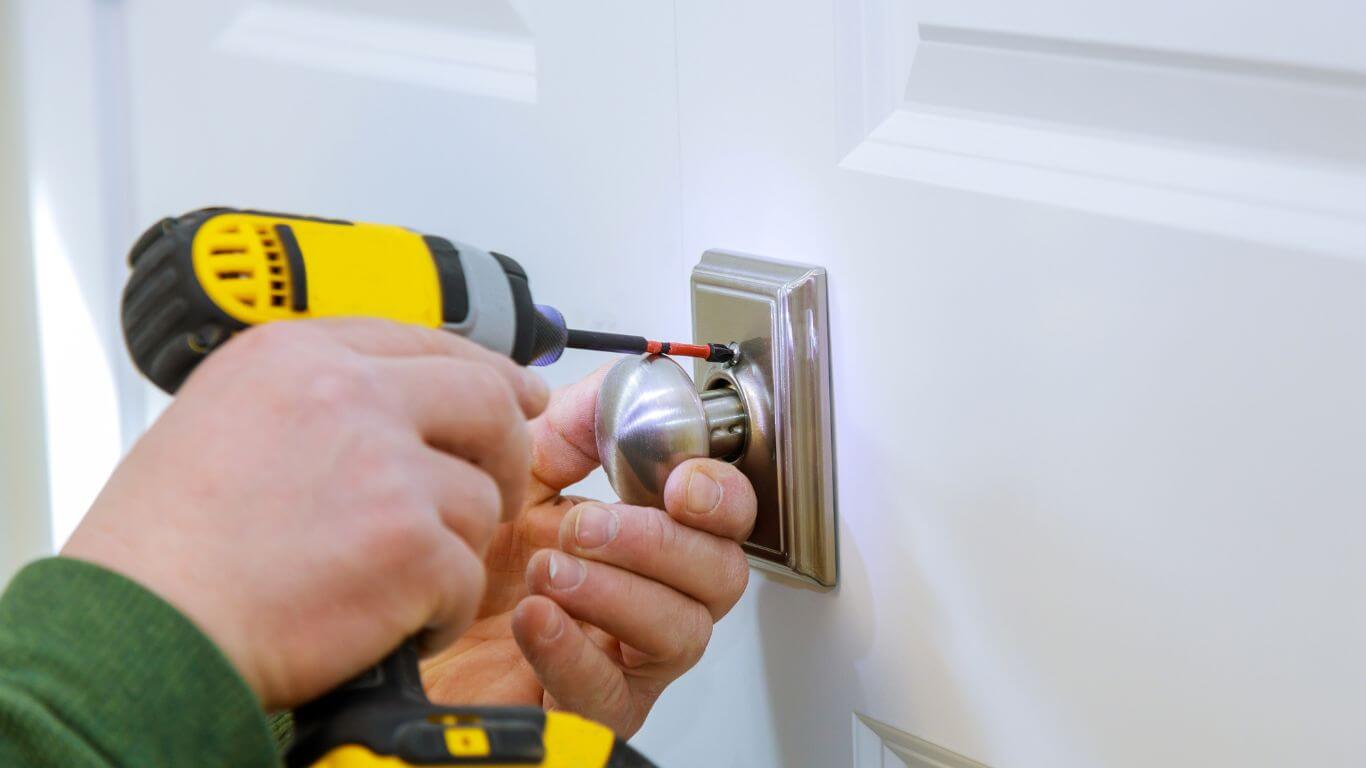
Every door has to be opened by something: a round knob or a lever handle. For most of the twentieth century, knobs were standard in Canadian homes. Over the last two decades, levers have become the more common choice in new builds and renovations. Both still have a place, and choosing between them is about who uses the door, what it is for and how it looks.
Knobs are turned by gripping and twisting. They need a firm grip and some wrist strength, especially when wet, cold or slippery. They are harder for small children and many pets to operate, which is sometimes an advantage.
Levers are pushed down, so they can be operated with an elbow, a closed hand, or a hand full of shopping. They are much easier for anyone with arthritis, limited grip or a disability, and easier for children once they can reach them. They are also easier for some dogs and cats to open.
For accessible design, levers are generally the expected choice, because they can be operated without tight grasping or twisting of the wrist. Public buildings and many commercial spaces use levers for this reason, and many households switch to levers as family members age. The wider changes that make doors easier to use are part of door hardware for seniors and, for businesses, accessible entrance hardware.
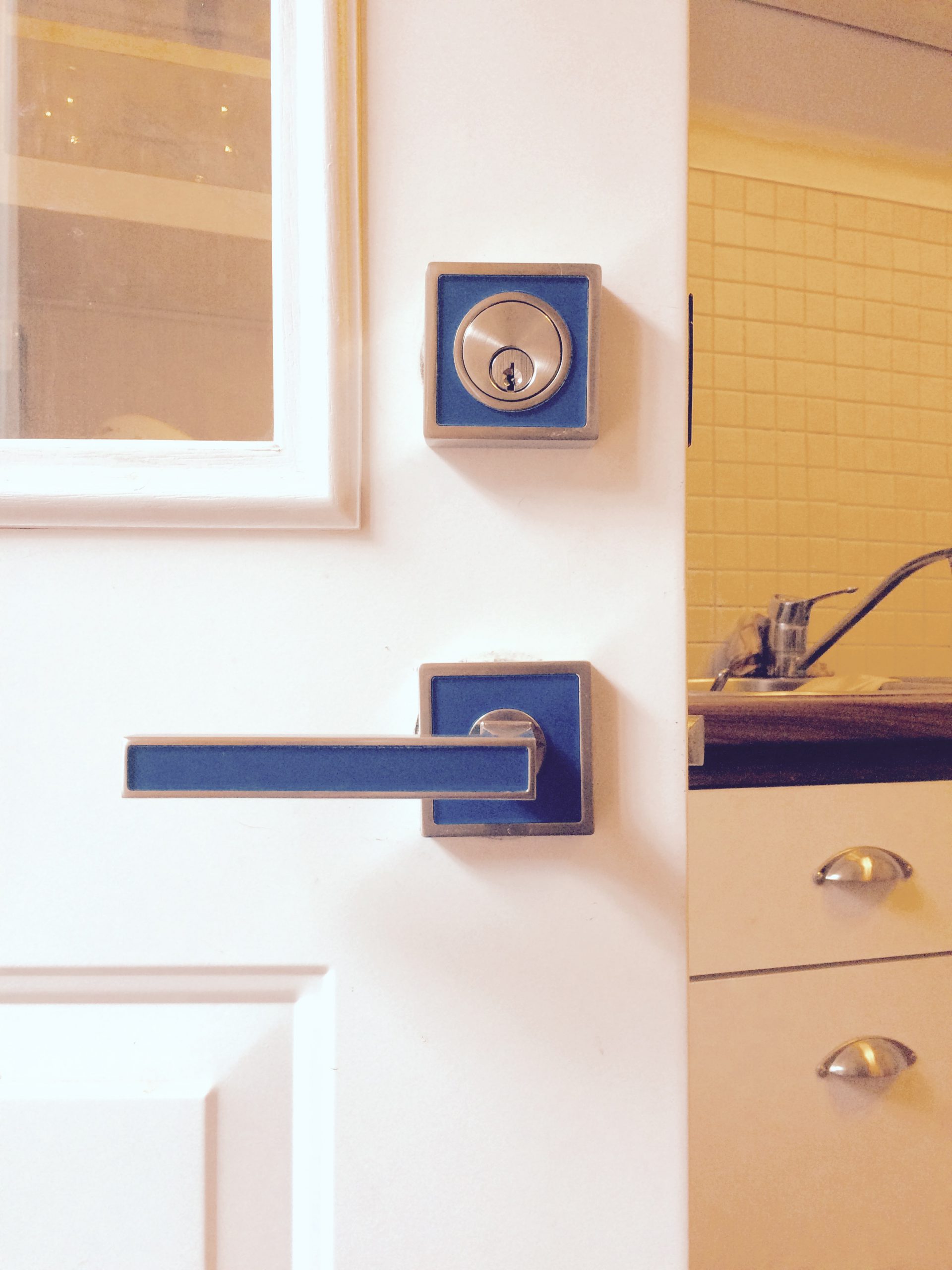
The handle itself is not the main security feature of an exterior door. A deadbolt does most of the work. That said, there are differences:
On an exterior door, a sturdy deadbolt with a reinforced strike matters far more than the choice of knob or lever.
Knobs are often left on doors that young children should not open, such as a door to basement stairs or a laundry room, for exactly the reason that small children find them hard. Lever-handled exterior doors in homes with toddlers benefit from a high secondary lock, as with childproofing doors and locks.
Dogs, especially larger ones, learn to open levers by jumping and pressing down. For doors a dog should not open, a knob, a lever turned to point upward, or a lock may be needed.
Photos
Photographs from GTA Lockman Mobile Locksmith Services work across Toronto and the GTA. Send a picture of your own door and we can tell you what the visit would involve.
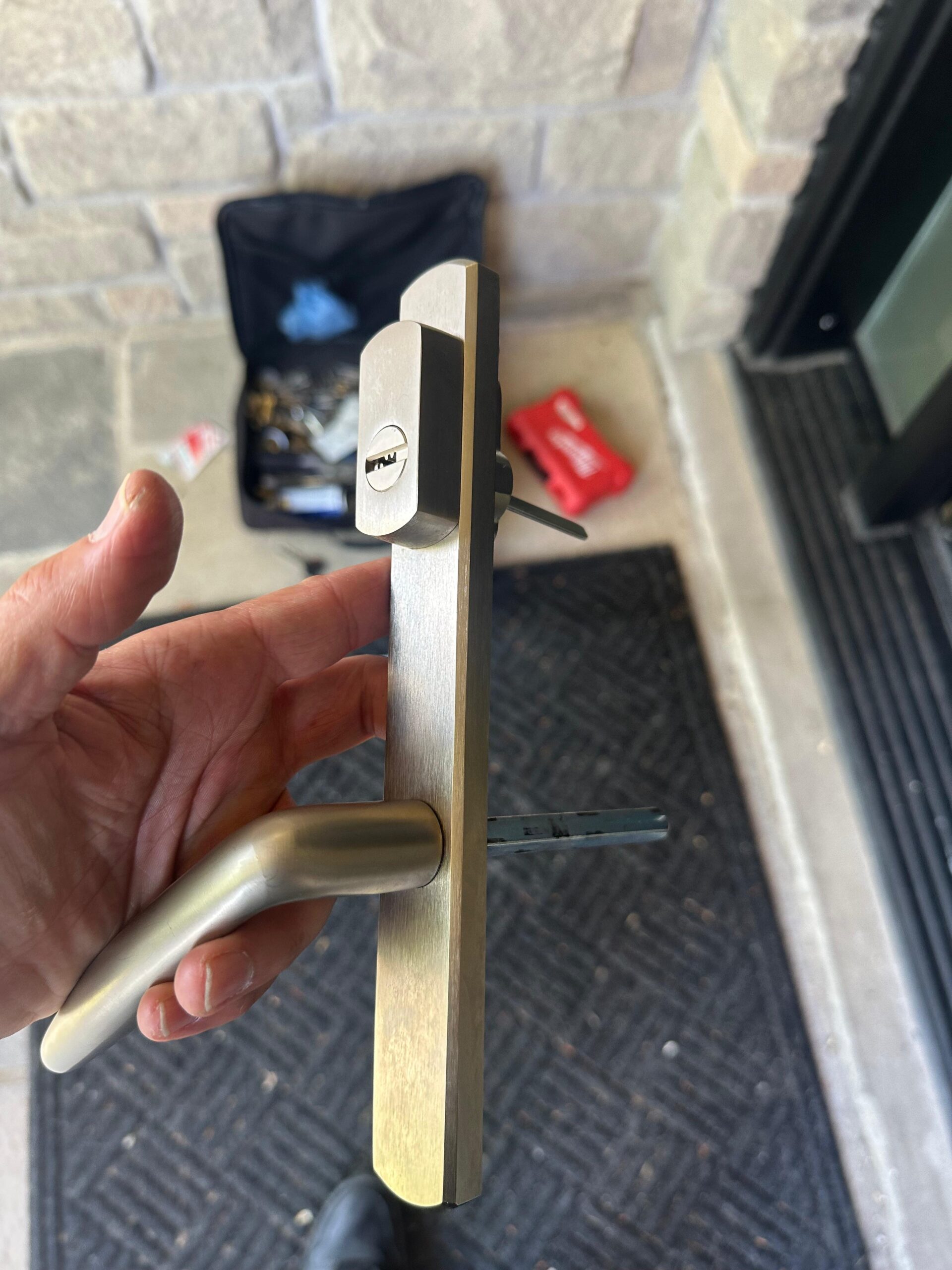
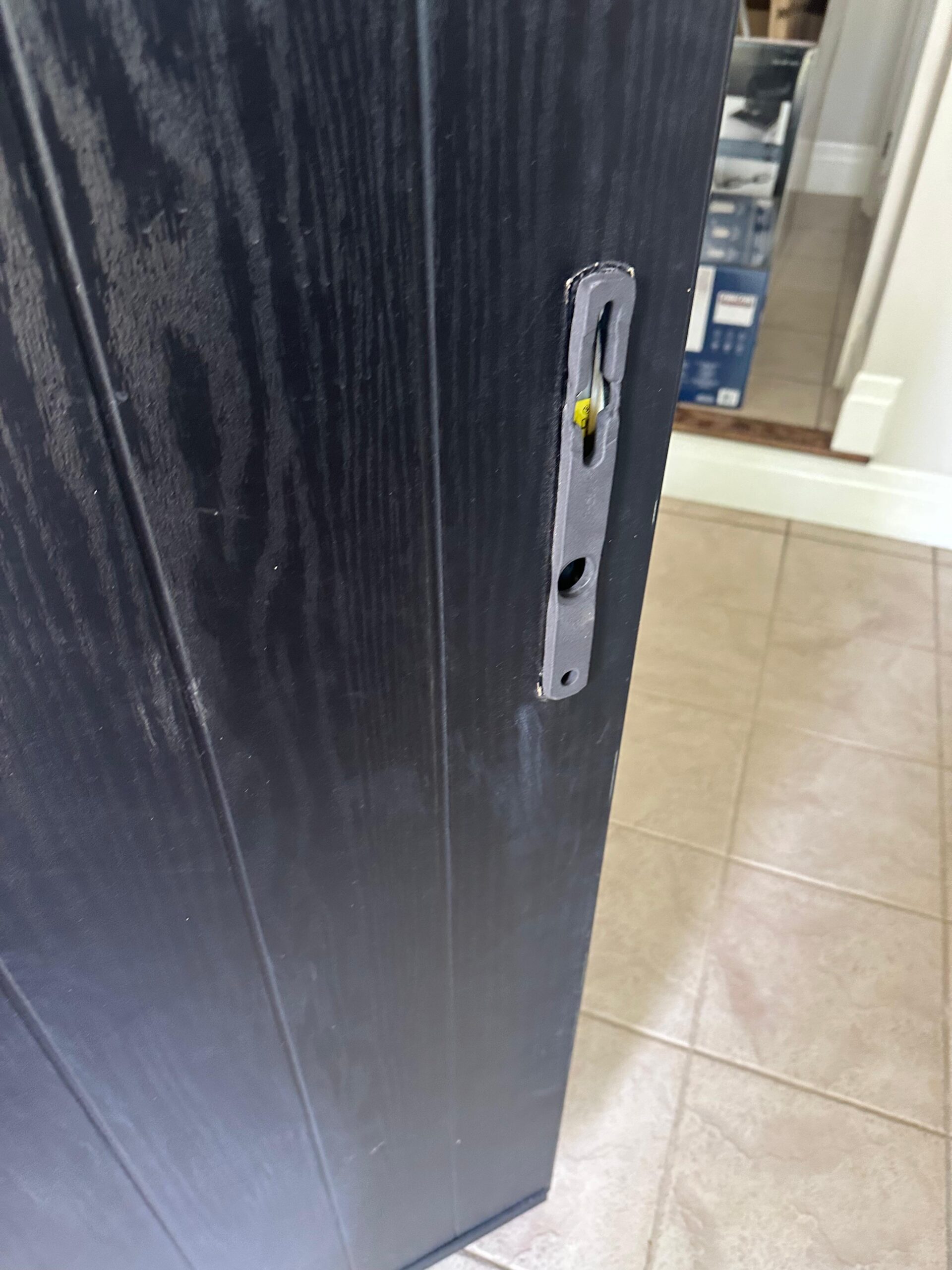
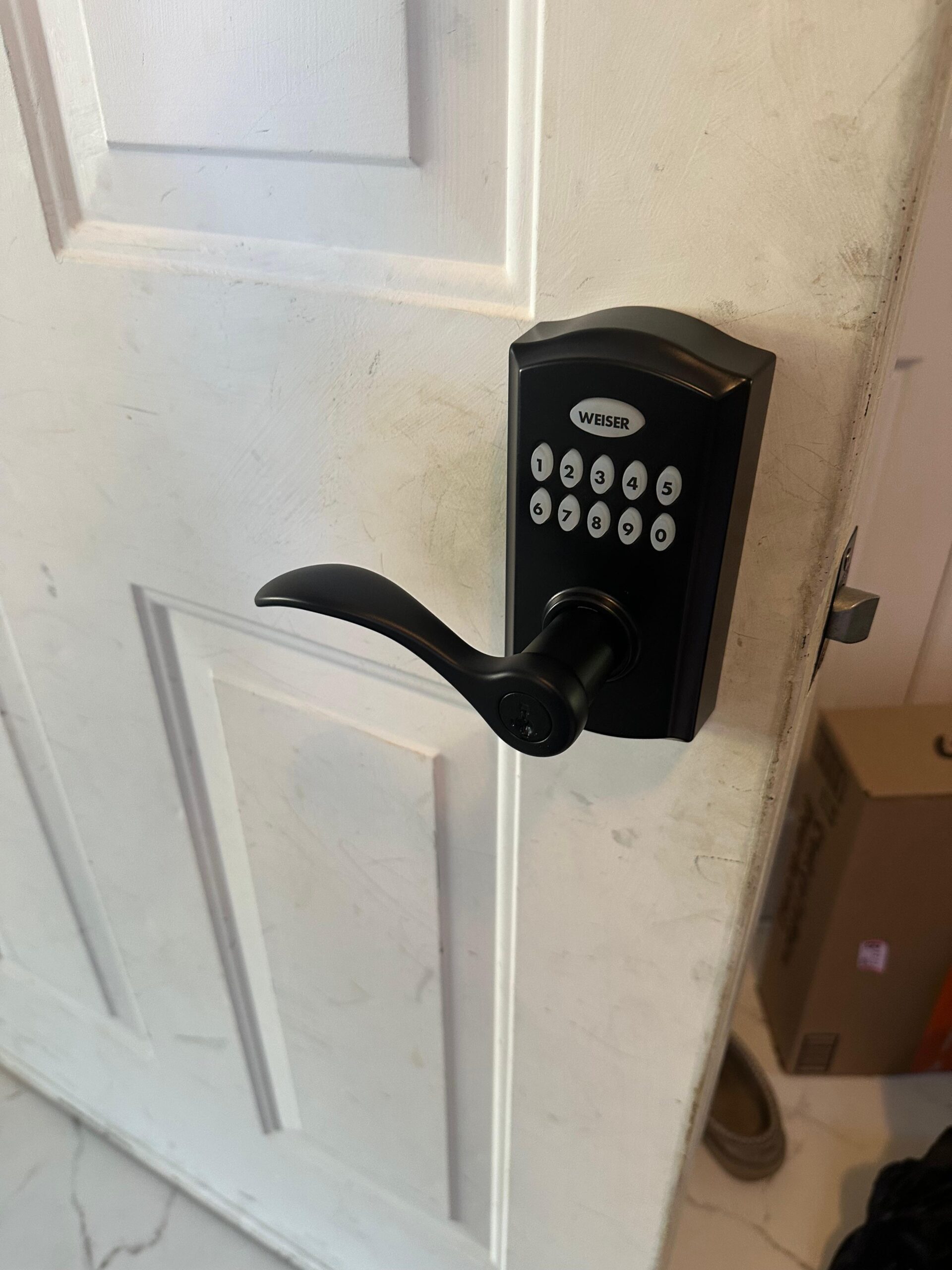
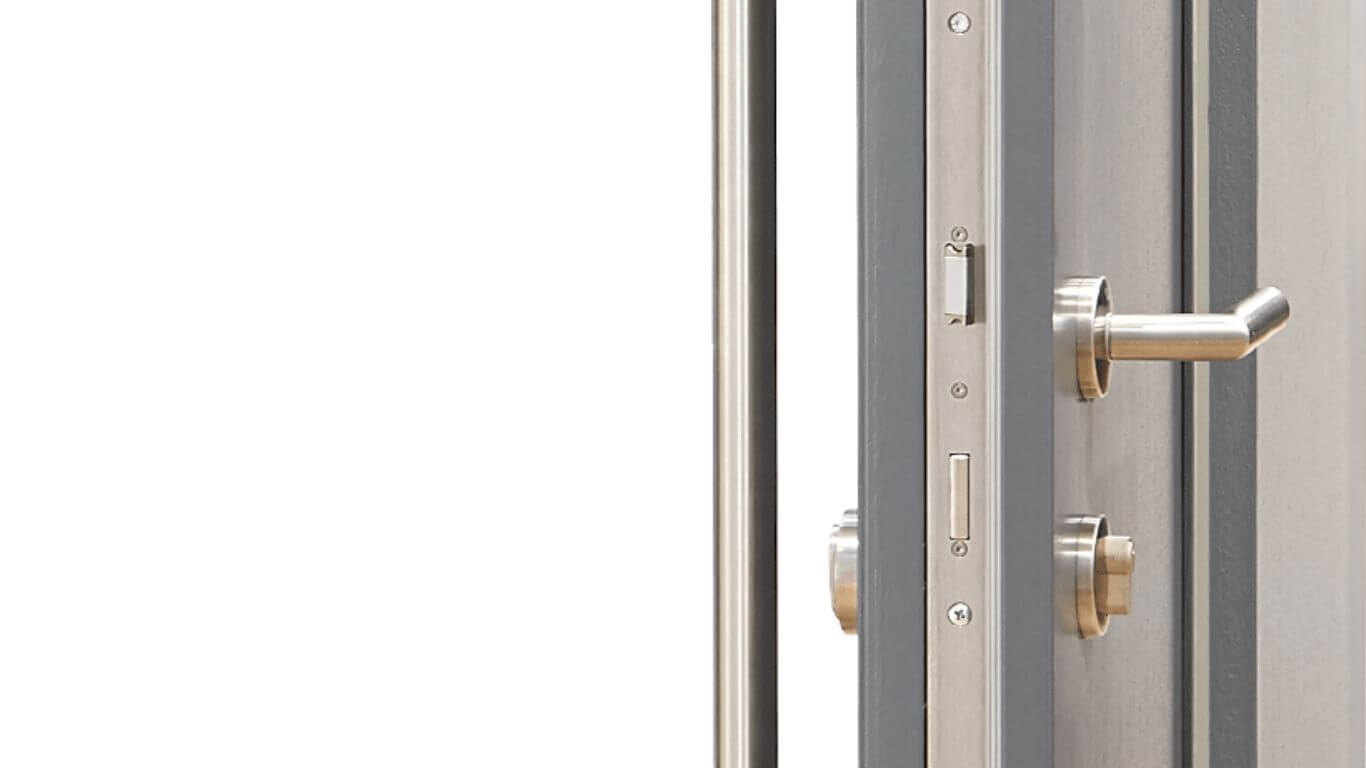
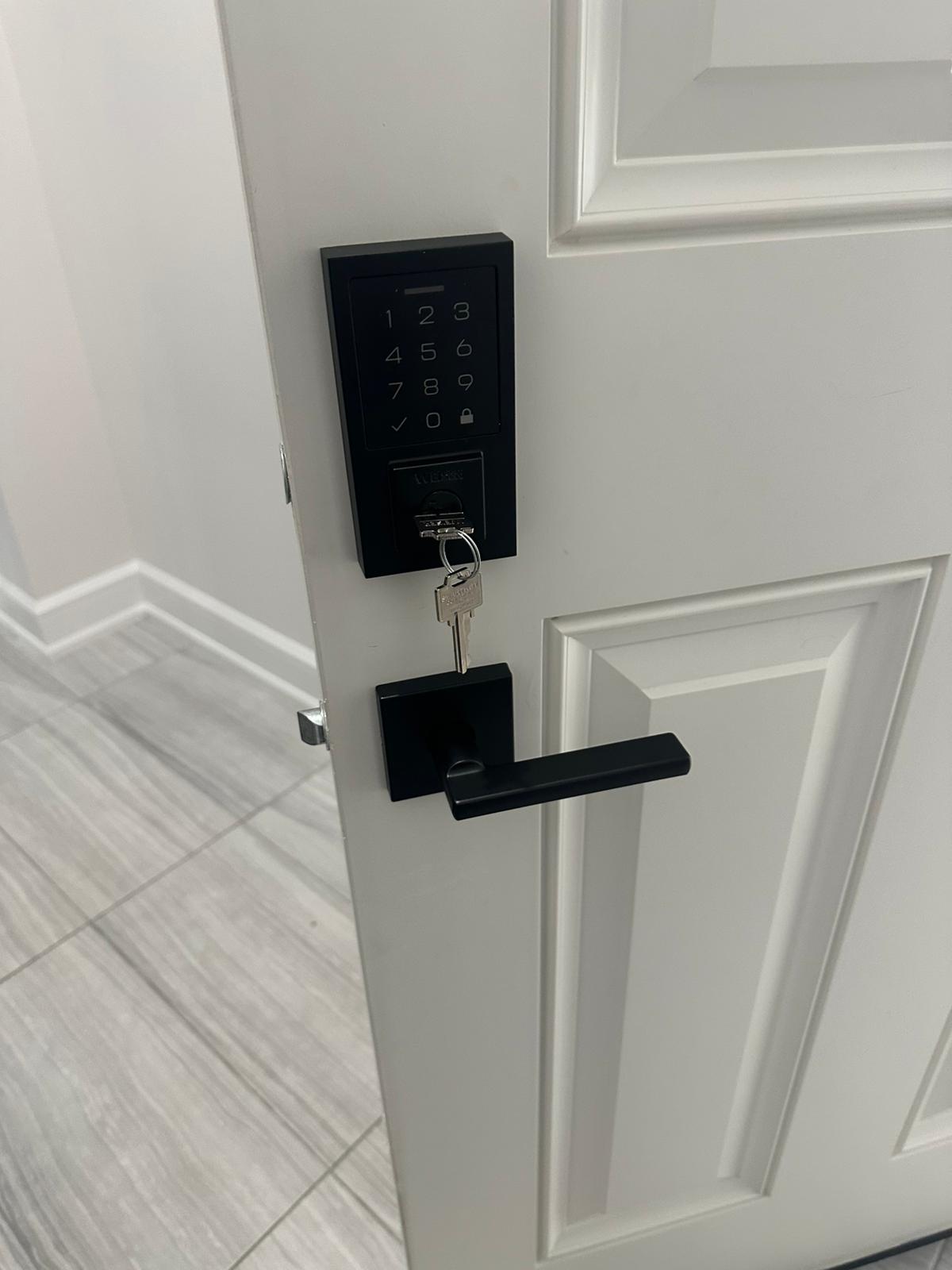
Levers dominate contemporary and transitional styles, with square or round roses and straight, curved or angular handles. Knobs remain common in traditional and period homes, with styles from simple round knobs to egg-shaped and crystal knobs. Both come in the same finishes. Keeping the style and finish consistent across doors seen together makes a house look finished, the idea behind matching door hardware across the house.
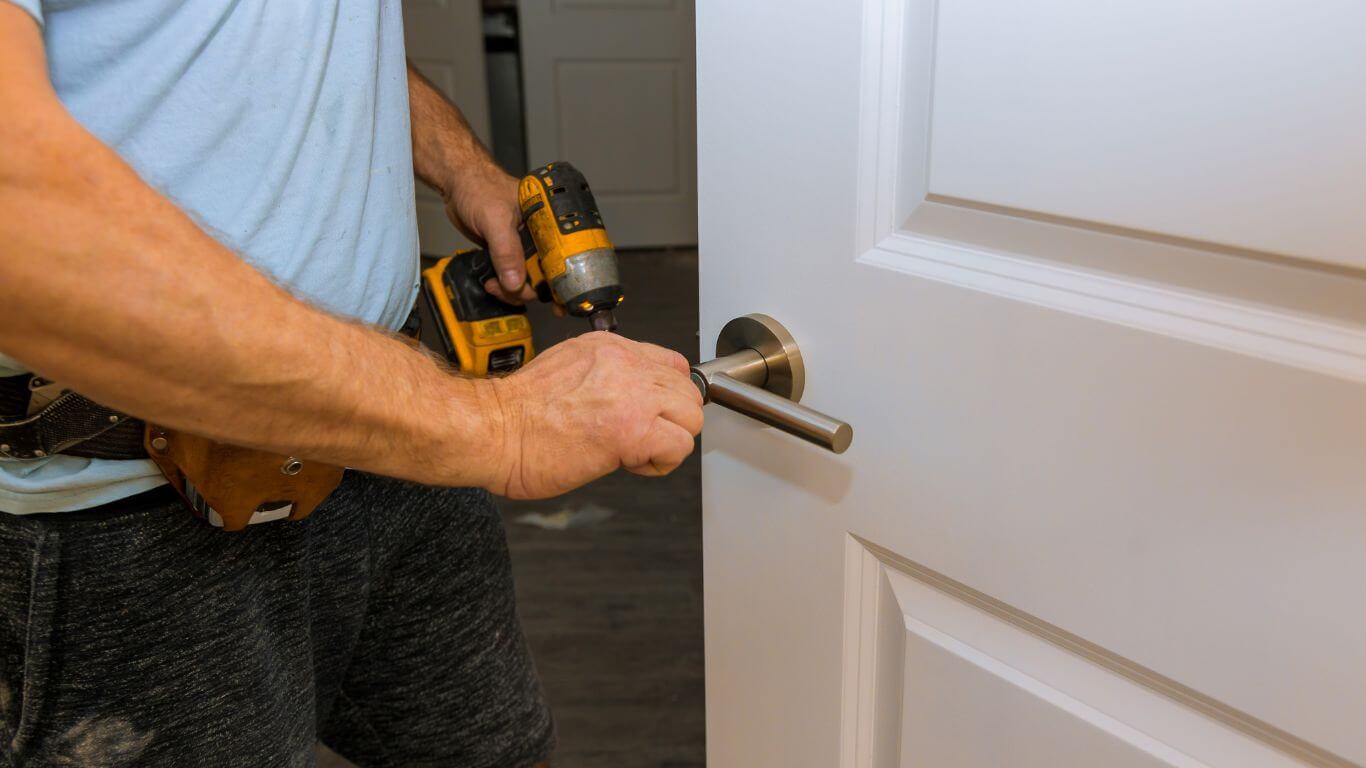
Levers often have a handing: they are set up to point towards the hinge side when at rest. Many are reversible, but some must be ordered for the door's hand. Knobs are not handed. The way to work out a door's hand follows the guidance for left-hand and right-hand doors.
Both knobs and levers come in the same functions:
Most interior and exterior doors use a standard bore and backset, so switching from knobs to levers is usually straightforward. Points to check:
Where a door has an old mortise lock, changing from knob to lever may mean changing the lock or fitting mortise-specific levers.
A common problem with levers is that they droop over time, as the return spring weakens. A drooping lever looks untidy and can stop the latch retracting fully. Quality levers have stronger springs or a spring cassette that can be replaced. The repair is the same as for a loose door handle.
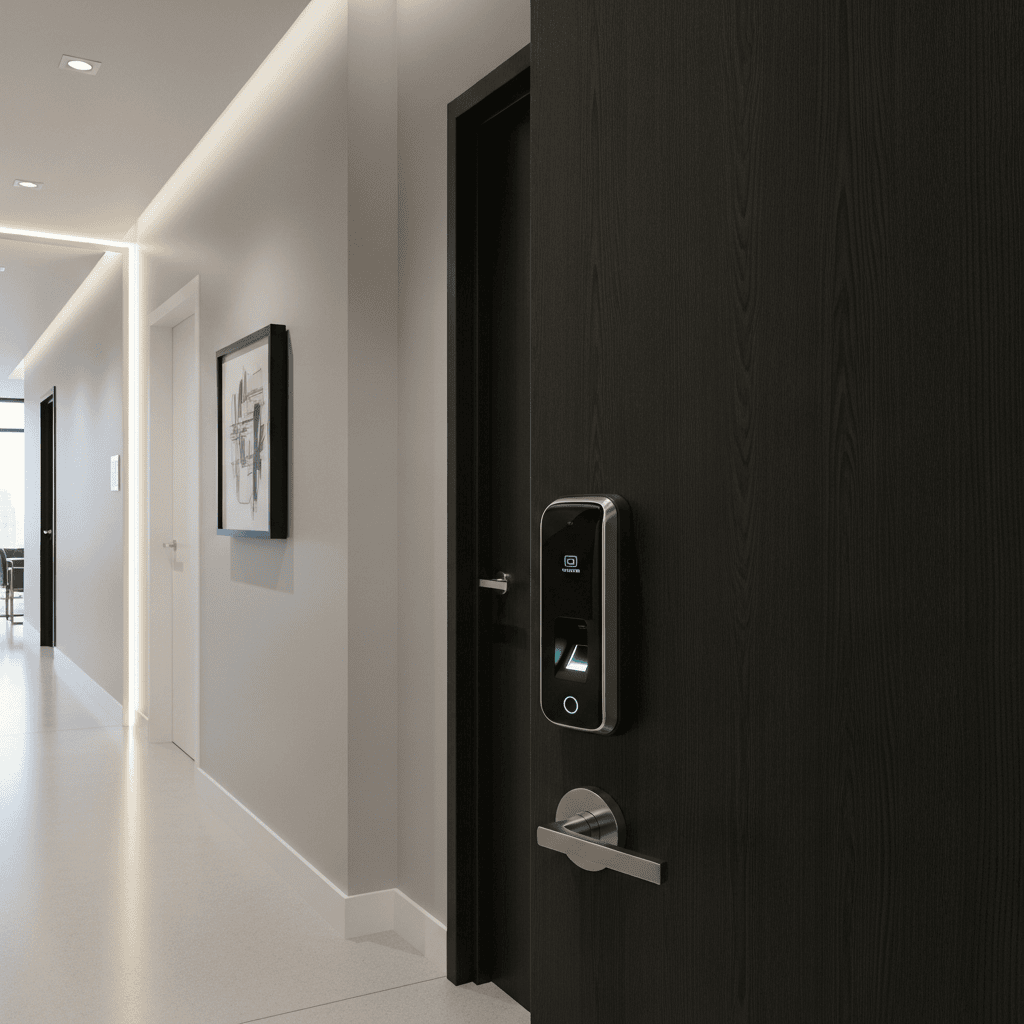
On commercial doors, levers are standard, usually on cylindrical or mortise lock bodies rated for heavy use. Cheap residential levers on a commercial door wear out and droop early. Grade matters more than appearance, as with lock grades.
On exterior doors, the handle is usually part of a handleset, a lever set, or a knob set paired with a separate deadbolt. Levers on exterior doors are convenient but more exposed to leverage, so quality and a clutch mechanism matter. On a front door used daily, a sturdy deadbolt with a lever or handleset from the same range keeps the look consistent and the security where it should be, in the deadbolt.
Heavy solid doors and doors with closers take more force to open. A lever gives a better grip and more leverage than a knob, which helps on a heavy door. Commercial doors with closers almost always use levers or pull handles for this reason.
Levers can be operated with an elbow or the back of a hand, which some households and businesses prefer for hygiene reasons, particularly on bathroom doors, clinic doors and kitchen doors. Many commercial facilities chose levers over knobs partly for this reason. Finishes that tolerate frequent cleaning, such as satin stainless or brushed nickel, last longer on high-touch handles.
Levers and knobs of similar quality cost about the same. The bigger cost differences come from grade, finish and brand, not from the shape of the handle. Replacing interior knobs with levers throughout a house is usually a moderate job, since most interior doors use standard preparations. Exterior sets cost more, especially when the deadbolt is replaced to match.
Closet and pantry doors often have dummy handles, which do not latch and simply give something to pull, paired with a ball catch or roller catch at the top of the door. Replacing dummy knobs with dummy levers is simple, and the same finish as the passage levers on nearby doors keeps everything consistent.
On doors to rooms with hazards, such as a laundry room, workshop or the stairs to a basement, levers make it easy for a toddler to get in. Either keep a knob on those doors, add a high latch, or keep the hazards locked away, as with other childproofing doors and locks.
On double doors, the active leaf carries a working lever, while the inactive leaf often has a dummy lever so both doors look matched. On French doors with narrow stiles, the lever's backset and rose size must suit the stile, and the lever must clear the glass. Choosing a lever designed for narrow stiles avoids hardware that cannot be fitted, as with French doors and double door locks.
Some houses mix knobs and levers deliberately: levers on doors used constantly, knobs on closets and doors that children should not open. Keeping the finish the same across both keeps the house looking consistent even when the shapes differ.
When only one handle in a house fails, it can be hard to find a match for an older style. Taking the old handle along, or photographing it with a tape measure, helps find the closest current model. Sometimes replacing a pair of doors seen together is better than a mismatched single handle.
Busy households with children and pets put handles through a lot of wear. Satin and brushed finishes hide fingerprints and light scratches better than polished ones, and matte black can show wear on high-touch handles over time. Choosing a finish for how the door is used, not only how it looks on day one, keeps the hardware looking good for longer.
Heavy, solid doors suit substantial levers or knobs; light interior doors suit lighter hardware. A very heavy lever on a light hollow-core door can strain the latch and the door skin over time. Matching the weight of the hardware to the door keeps both working well.
Handles feel different in the hand. Where possible, try a lever or knob in a showroom before ordering for a whole house. A handle that looks right but feels awkward to use will be used many times a day for years, so comfort is worth checking.
Doors to decks, balconies and yards are often opened with wet or cold hands, or while carrying things. Levers suit these doors well, provided the deadbolt or patio lock is used every time the door is closed, since the lever alone is not a lock.
Tell us which doors, whether you want knobs or levers, the function for each door and the finish you have in mind. Photographs of the existing hardware and door edges help confirm fit.
We can supply and fit levers or knobs to match your doors, set the correct function and handing, repair drooping levers, and key exterior handles to your house key. Household work is part of our residential locksmith services.
Keep reading
Neither is better for every door. Levers are easier for people with limited grip and for anyone carrying things. Knobs are harder for small children and pets to open, which suits some doors.
Neither is better for every door. Levers are easier for people with limited grip and for anyone carrying things. Knobs are harder for small children and pets to open, which suits some doors.
The handle is not the main security on an exterior door; the deadbolt is. Quality levers have a clutch that resists being forced, while cheap levers can be broken by force.
Usually, if the door has a standard bore and backset. Check the rose size, the handing of the lever and clearance from nearby walls before buying.
The return spring has weakened. Quality levers have replaceable springs or cassettes; cheaper ones may need replacing.
Some do. Many are reversible, but some must be ordered to suit the direction the door swings.
Use a knob on that door, turn the lever to point upward if it allows, or add a lock or high latch the dog cannot reach.
Passage for no lock, privacy for bathrooms and bedrooms, entry for keyed exterior doors, and dummy for fixed handles.
Levers are standard on commercial doors and expected for accessible design. They should be commercial grade, since residential levers wear out under heavy use.
GTA Lockman Mobile Locksmith Services is a mobile locksmith working on homes, businesses and vehicles across Toronto and the GTA, with more than 14 years in the trade. Every review is written by a customer on Google, where you can read them in full.
Areas served: Toronto, North York, Scarborough, Etobicoke, Vaughan, Richmond Hill, Markham, Stouffville, Newmarket, Mississauga, Brampton, Oakville, Milton, Halton Hills, Pickering, Ajax, Whitby, Oshawa, Uxbridge.
Describe the door, hardware and service address. Contact GTA Lockman Mobile Locksmith Services to confirm the scope and scheduling for your location.