
Free quote
Request a Free Quote
Tell us what you need and where. We reply during business hours and confirm the price before booking.
Call (647) 955-3277 Mon–Thu 8:30 AM–9:00 PM · Fri 8:30 AM–4:00 PM · Sun 9:30 AM–9:00 PM · Closed SaturdayLocksmith services are always 10% off for seniors.
Open Mon–Thu 8:30 AM–9 PM, Fri 8:30 AM–4 PM, Sun 9:30 AM–9 PM
GTA Lockman Mobile Locksmith Services · Toronto & GTA
Bring mismatched locks onto one key and one finish without replacing hardware that still works.
Related services
Reduce the keys you carry where cylinders and access requirements allow a suitable keyed-alike arrangement.
Learn moreUnderstand what a privacy lock does, how to release one from outside, and when a room needs a keyed lock.
Learn moreWhat Grade 1, 2 and 3 measure, what they leave out, and why the strike and frame often matter more.
Learn moreWhen hardware you already own can move to another door, and when the fit makes that a false economy.
Learn moreChoose compatible front-door hardware with the right fit, operation and finish for the existing opening.
Learn moreRepairs, rekeying and replacement hardware for homes, condos and apartments, with attention to the whole door.
Learn more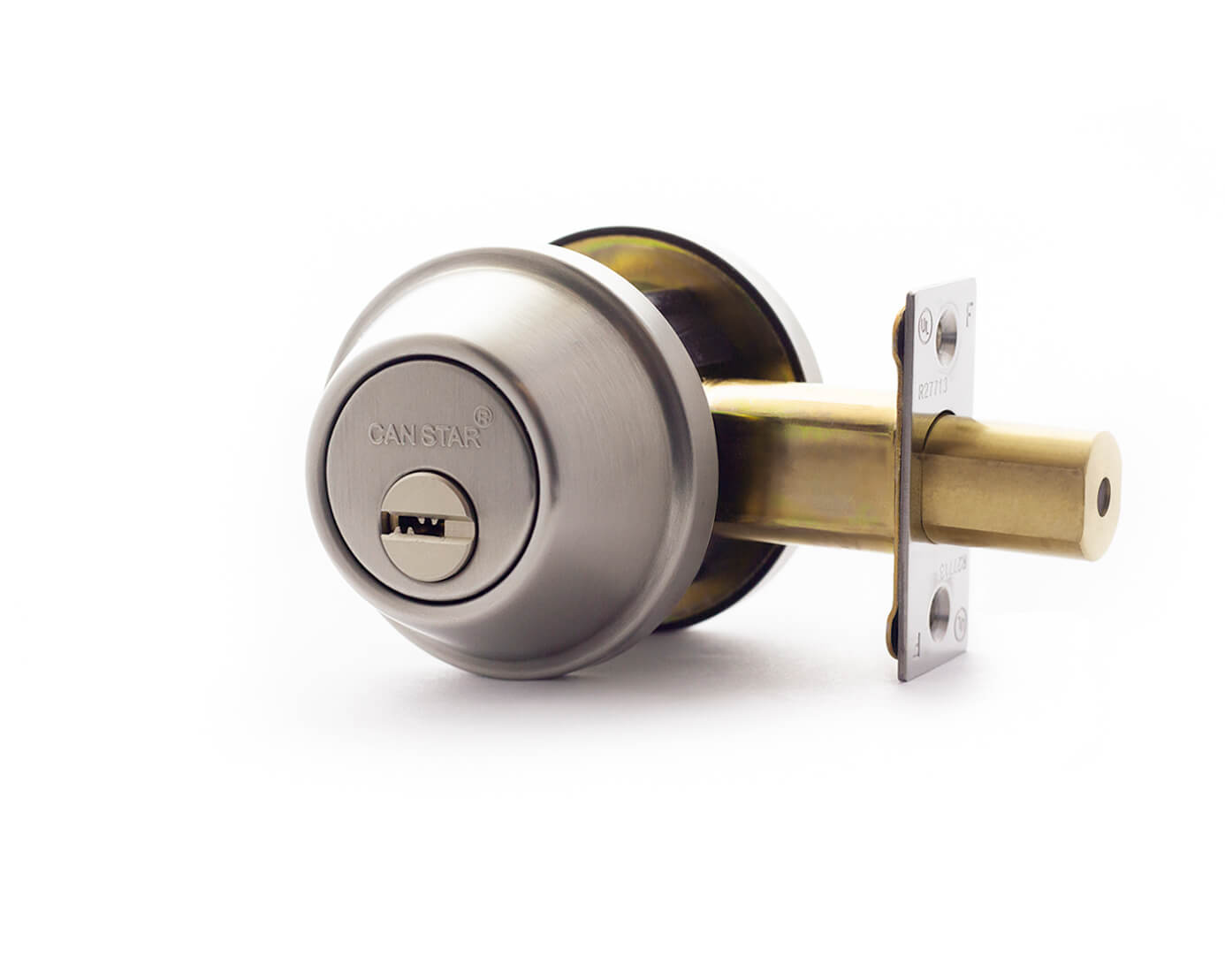
Walk around most houses and the door hardware tells the history of the place. A brass handleset from the original builder on the front door, a nickel knob someone bought in a hurry on the side door, a black lever on the garage entry from a recent renovation, and a deadbolt on the back door that takes a key nobody can find. Each piece works, more or less, but nothing matches, and the house carries four or five different keys.
Bringing the hardware together is partly about appearance and partly about making the house simpler and more secure to live in. It does not always mean replacing everything.
There are three separate things people mean when they talk about matching door hardware, and they can be handled independently.
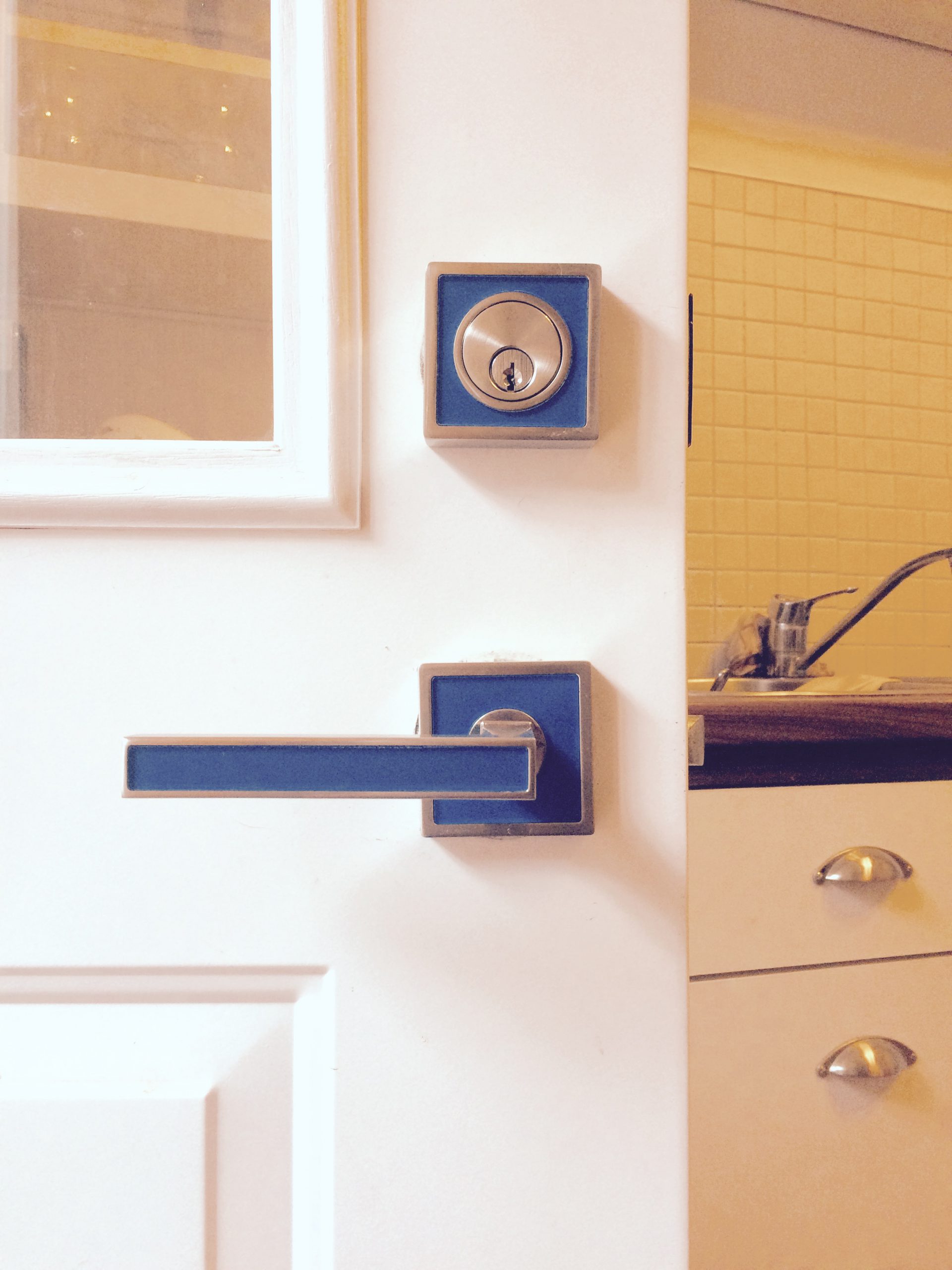
Finish. Satin nickel, oil-rubbed bronze, matte black, polished or aged brass, satin chrome. A consistent finish across the visible hardware makes a house look finished, especially where several doors are seen together.
Style. Knobs or levers, round or square roses, traditional or contemporary handlesets. Matching style matters most on doors seen side by side, such as a row of interior doors along a hallway, or the front door and a nearby side entrance.
Keying. Whether one key operates every exterior lock. This is the part that affects daily life most, and it is often possible without changing the look of anything.
The most useful change in a house with mismatched hardware is usually getting every exterior lock onto the same key. That removes the ring of keys, makes it easier to give a family member or a cleaner a single key, and means one rekey covers the whole house when a key goes missing.
Most residential cylinders can be rekeyed to a common key, provided they share a compatible keyway. Where one lock uses a different keyway, its cylinder can sometimes be swapped for a compatible one, or the lock replaced if it is worn anyway. Rekeying the whole house to one key for every door usually takes a single visit.
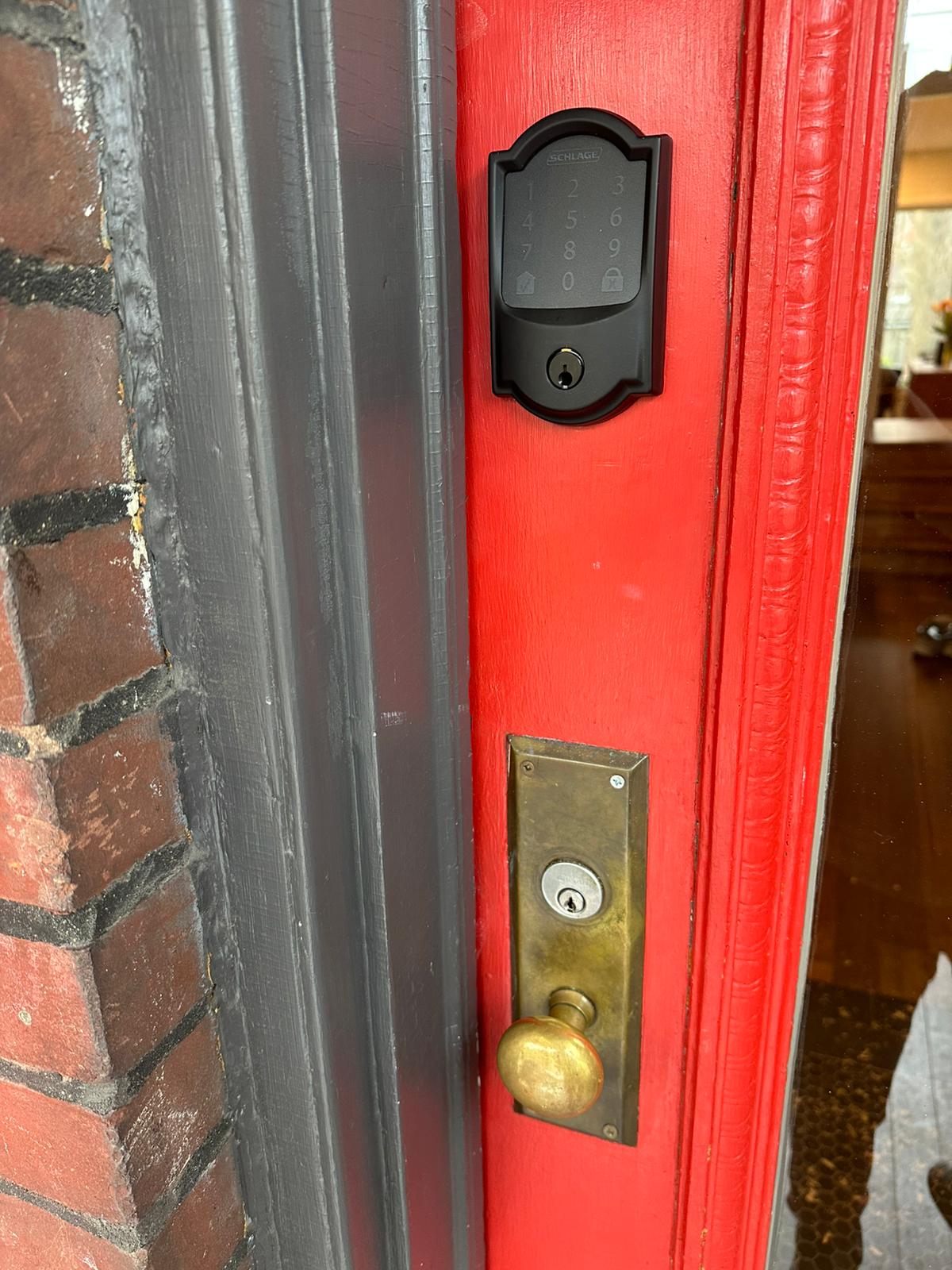
Keying alike does not require the locks to look the same. A brass front handleset and a black side-door deadbolt can share one key perfectly well.
Replacing sound hardware only to change its colour is expensive and often unnecessary. A few approaches keep costs down.
Match where doors are seen together. The front door and anything visible from the entrance hall matter more than a basement door or a closet.
Replace in stages. When a lock wears out, replace it in the finish the house is moving towards. Over a few years the hardware converges without anything being thrown away early.
Keep sound hardware that fits. Good-quality locks coming off one door can sometimes move to another, the idea behind reusing and moving existing door hardware.
Choose finishes that age well. Living finishes such as unlacquered brass darken and change with handling. Plated finishes such as satin nickel stay closer to their original look. Matte black shows scratches on heavily used doors more than a mid-tone finish.
Different manufacturers' finishes rarely match exactly, even when they share a name. One maker's satin nickel may be warmer or cooler than another's, and "bronze" varies from nearly black to distinctly brown. Where hardware from different makers sits on doors seen together, it is worth comparing samples in the house's own light before committing.
Mixing manufacturers also affects keying. Many residential brands use different keyways, so a house with three brands may need cylinders changed to get onto one key, even though the locks themselves are fine.
Photos
Photographs from GTA Lockman Mobile Locksmith Services work across Toronto and the GTA. Send a picture of your own door and we can tell you what the visit would involve.
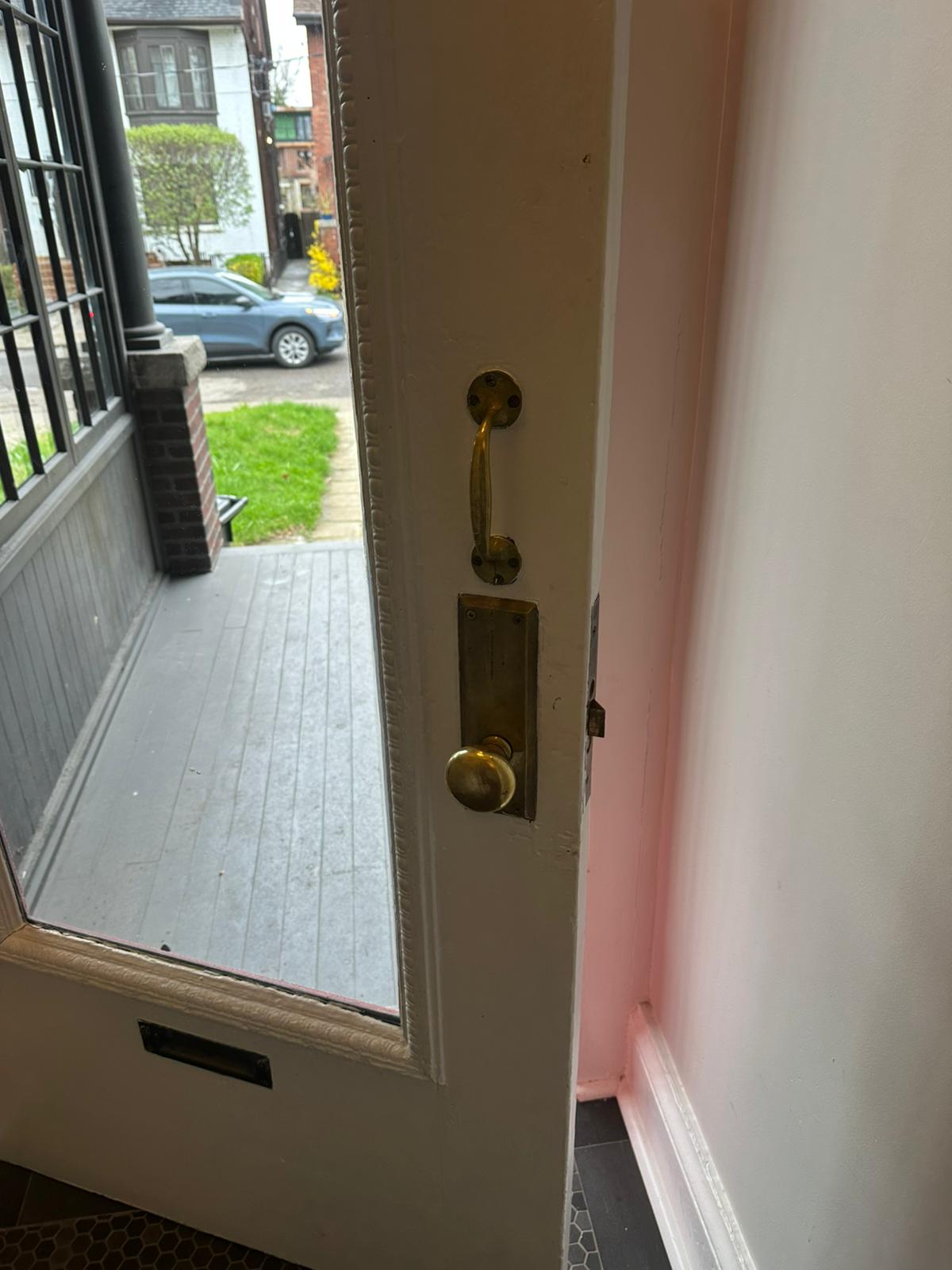
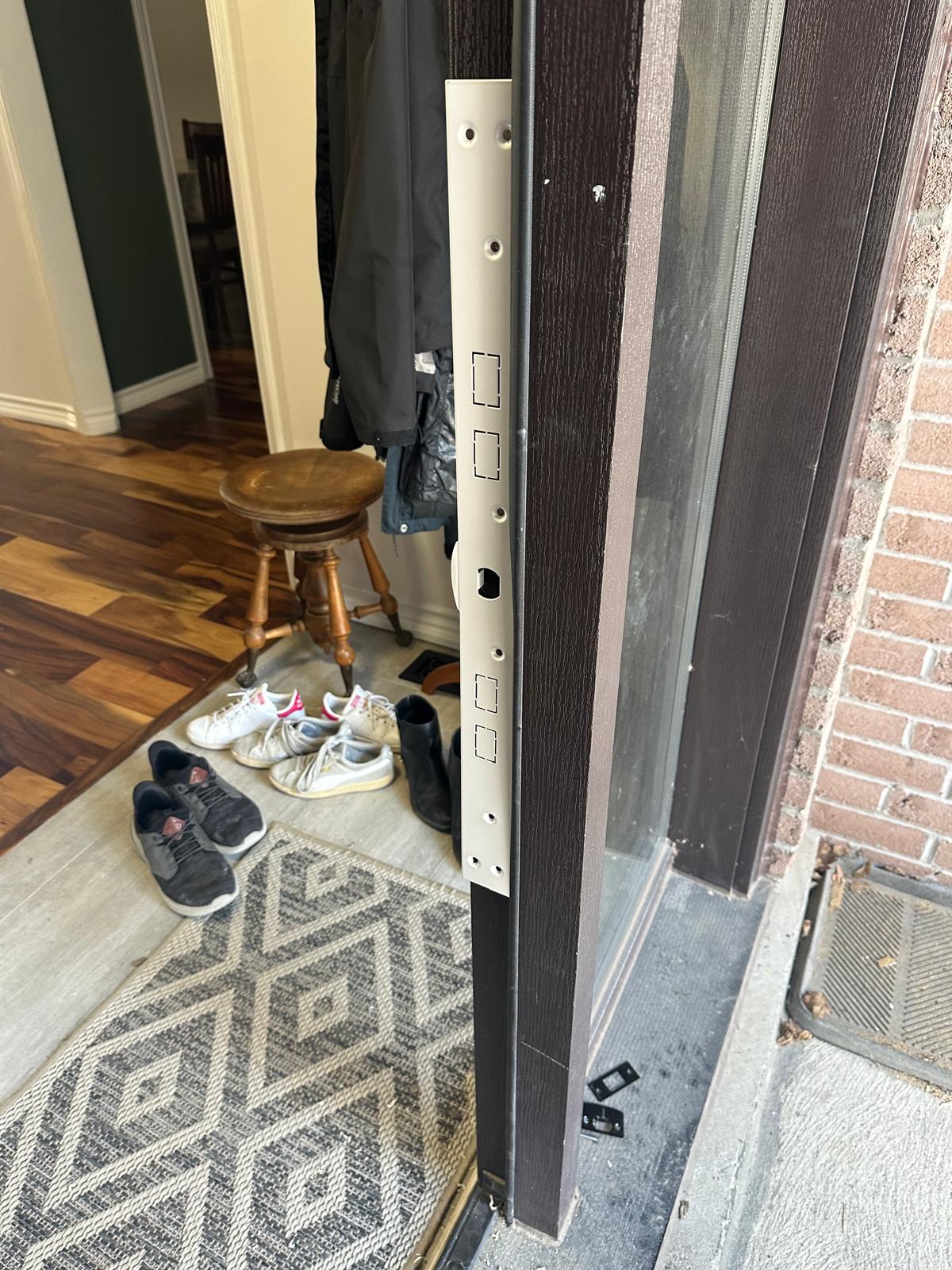
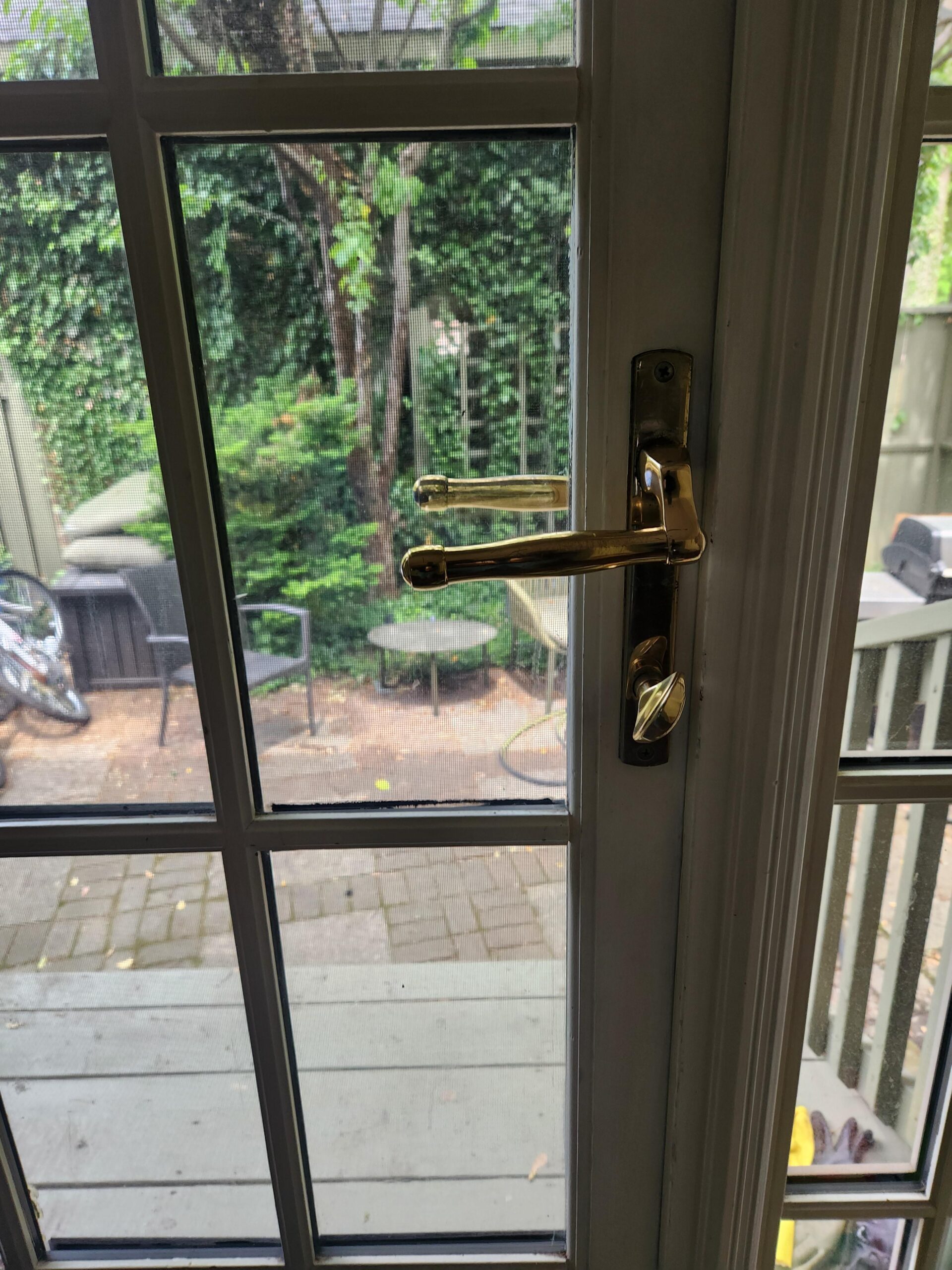
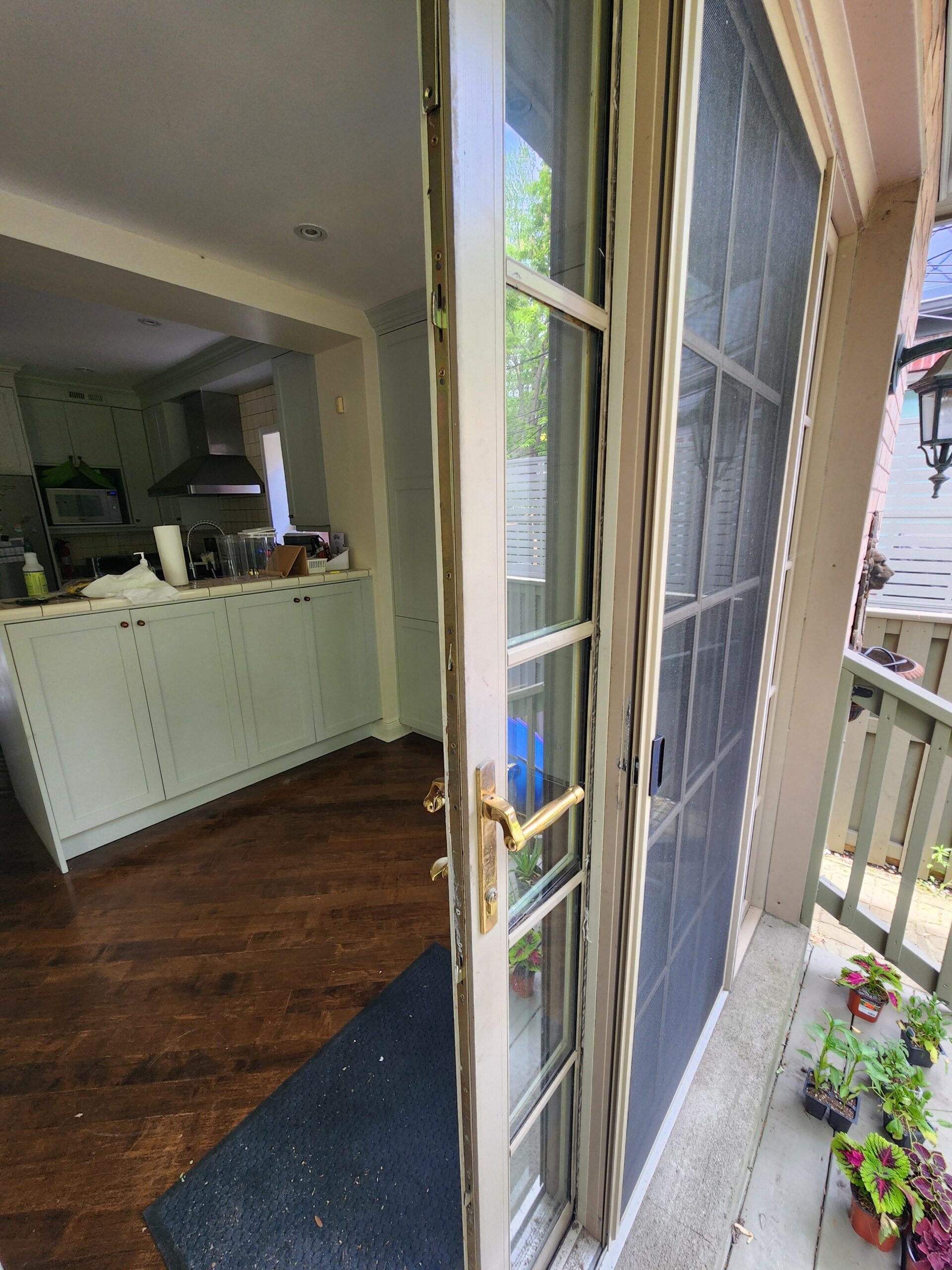
Interior doors are where matching style makes the biggest visual difference, because they are seen in groups. The usual set in a house is passage sets for hallways and living areas, privacy sets for bathrooms and bedrooms, and dummy handles for closets.
Changing interior hardware is usually straightforward because most interior doors use standard bore holes and backsets. Where old knobs are replaced with levers, check the handing and the rose size, since a smaller rose may leave an outline of old paint or an unfinished area. Choosing the right function for each room matters too, and interior privacy locks on bathrooms should have an outside release so a locked door can be opened in a hurry.
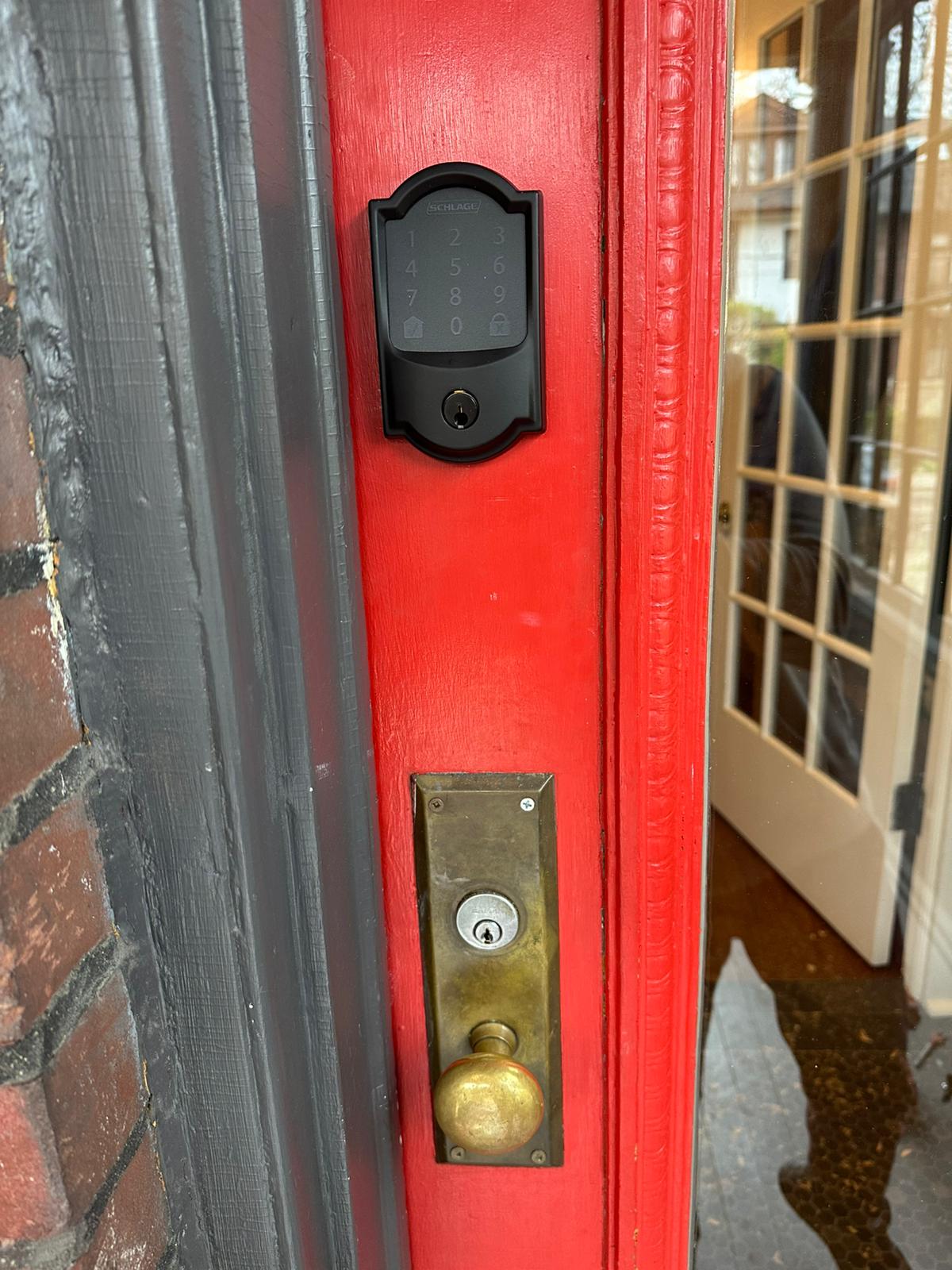
On exterior doors, matching should never come at the cost of security. A handsome handleset with a light-duty deadbolt is a poor trade on the front door.
Check that the deadbolt throws a full bolt, that the strike is fixed into the framing, and that the grade suits a door used every day. Grade 1 and Grade 2 hardware stands up to daily use far better than Grade 3, and lock grades are a useful guide when choosing. A matching set that combines a sturdy deadbolt with a latch in the same finish gives both appearance and strength.
Where the front door is being replaced as part of the change, front door lock replacement can often use the existing preparation, with trim sized to cover old holes neatly.
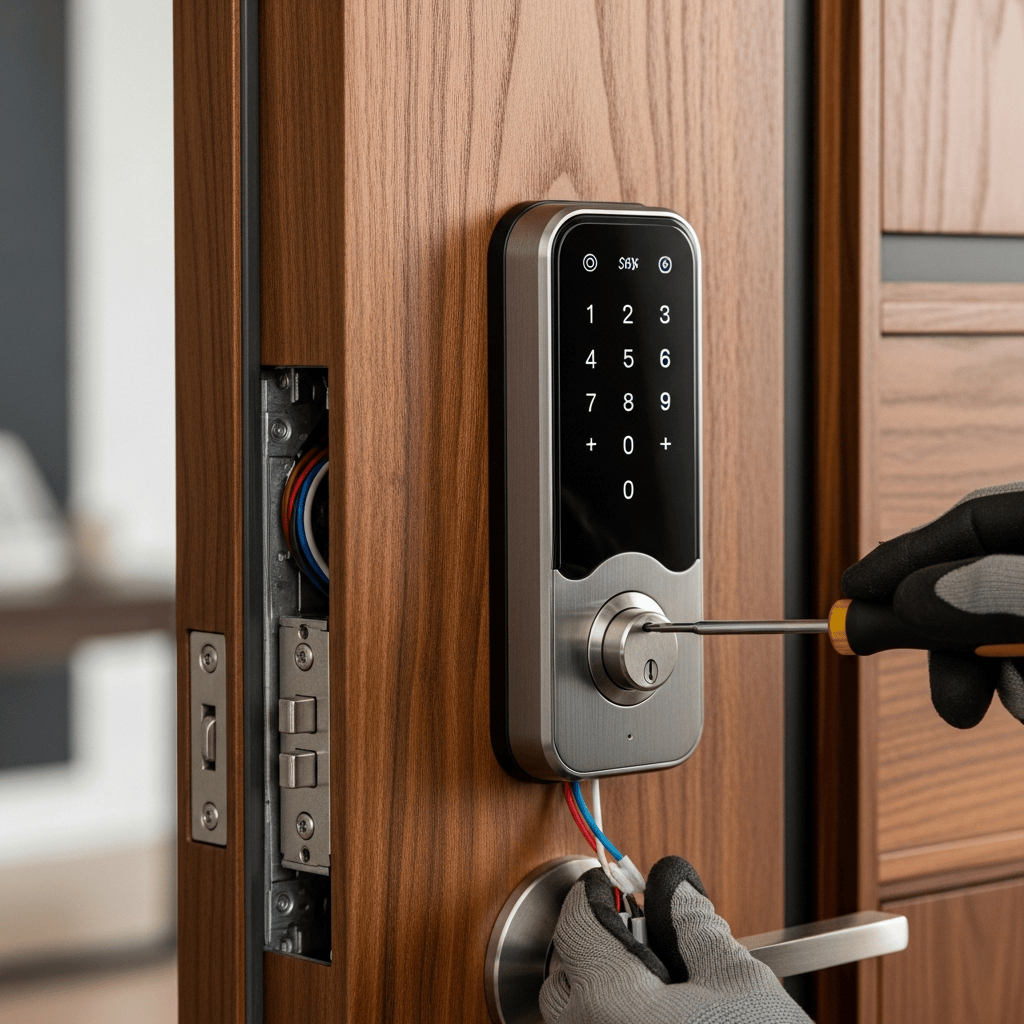
Smart locks and keypad deadbolts are often the piece that does not match. Most are available in a small range of finishes, and many pair with a matching handleset or lever from the same maker. Where a smart deadbolt is added to one exterior door, choosing a finish close to the rest of the hardware helps it sit comfortably.
A smart lock that uses a key backup can often be keyed to the house key too, which keeps one key for every exterior door even when one of them is electronic.
A practical order:
This approach spreads the cost, keeps working hardware in service, and delivers the most useful change, one key, first.
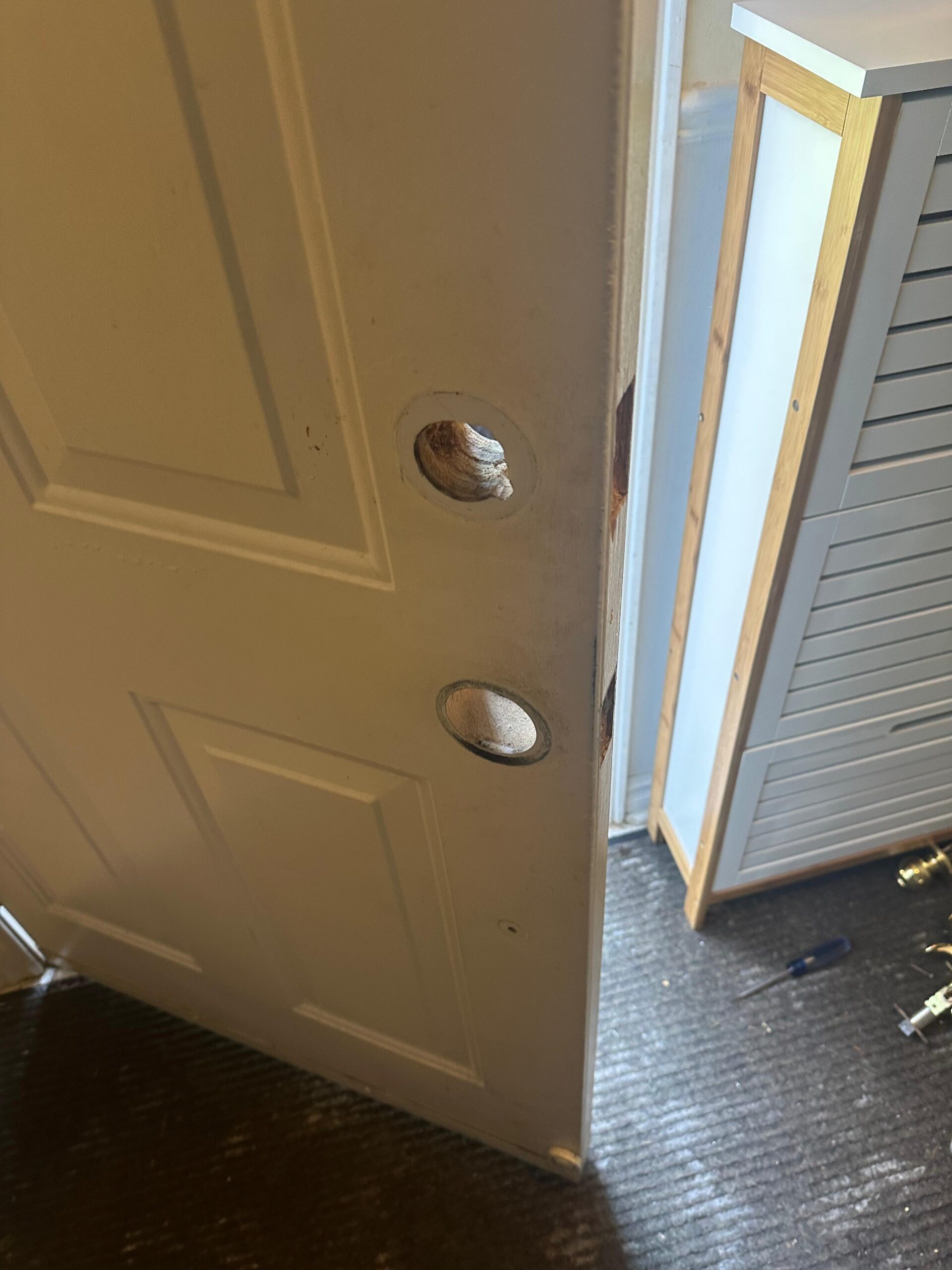
Measure before buying. The backset (the distance from the door edge to the centre of the bore), the bore diameter, the door thickness and the latch faceplate shape all decide whether new hardware drops straight into the existing preparation. Photographs of the door edge and both faces, with a tape measure in view, answer most of those questions.
Check the handing for levers, since some levers are handed and need to be set up for the direction the door swings.
Changing from knobs to levers is one of the most common reasons people update their hardware, and it is worth thinking about who uses each door. Levers are easier for anyone with limited grip, for someone carrying shopping, and for older family members. They are also easier for small children and some pets to open, which matters on an exterior door or a door to the basement stairs.
A house often ends up with levers on most interior doors and a handleset or lever with a deadbolt on the exterior doors. On doors a young child should not open, a knob or a lever with a separate high latch may still be the better choice for a few years.
Some doors are opened once a year: a side door nobody uses, a door to a crawlspace, a basement walkout. Their hardware tends to be forgotten, and their keys lost. When bringing the house onto one key, include these doors. A seldom-used exterior door with a lock nobody can open is still a way in for someone else.
Once the hardware is sorted, keep a short record: which locks are on which doors, the finish and model where known, which key they use, and how many keys exist. A photograph of each door's hardware stored with the house papers helps when a part needs replacing years later, and it makes a future rekey much simpler because the locksmith knows what to expect.
Buyers notice mismatched and worn hardware at the front door more than anywhere else. Refreshing the entrance hardware in one consistent finish, and making sure every exterior door locks cleanly, is one of the more visible small improvements before a sale. Interior doors can usually be left as they are.
Tell us which doors you want on one key, which doors you want to change the look of, and the finish you have in mind. Photographs of each door's hardware and edge help us advise which locks can be rekeyed and which need replacing.
We can rekey or re-cylinder sound locks to one key, supply and fit new hardware in the chosen finish, and plan the change in stages if that suits the budget. Other work around the house comes under our residential locksmith services.
Keep reading
Sometimes. It depends on the keyway. Locks with compatible keyways can be rekeyed to one key. Where one uses a different keyway, its cylinder can often be replaced with a compatible one without changing the rest of the lock.
Sometimes. It depends on the keyway. Locks with compatible keyways can be rekeyed to one key. Where one uses a different keyway, its cylinder can often be replaced with a compatible one without changing the rest of the lock.
No. Most sound locks can be rekeyed so they share one key. Replacement is only needed where a lock is worn, too light for the door, or cannot take a compatible cylinder.
Usually, if the backset and bore size are standard. Check the rose size too, since a smaller rose may leave paint lines or old screw holes visible around the new hardware.
Finishes vary between manufacturers and even between production runs. Comparing a sample against the existing hardware in the house's own light before ordering avoids mismatches on doors seen together.
Plated finishes such as satin nickel stay close to their original look. Matte black can show wear on heavily used handles, and living finishes like unlacquered brass darken with handling, which some people like and others do not.
Many smart locks with a key backup accept a cylinder that can be rekeyed to the house key, so every exterior door can still share one key.
It is a cosmetic decision. Interior hardware is usually simple to change because the doors use standard preparations, and it makes a visible difference where many doors are seen together.
The backset, bore diameter, door thickness and latch faceplate shape, plus the handing for levers. Photographs of the door edge with a tape measure in view help us confirm fit before anything is ordered.
GTA Lockman Mobile Locksmith Services is a mobile locksmith working on homes, businesses and vehicles across Toronto and the GTA, in the trade since 2010. Every review is written by a customer on Google, where you can read them in full.
Areas served: Toronto, North York, Scarborough, Etobicoke, Vaughan, Richmond Hill, Markham, Stouffville, Newmarket, Mississauga, Brampton, Oakville, Milton, Halton Hills, Pickering, Ajax, Whitby, Oshawa, Uxbridge.
When you call, tell us the type of door, the lock you have now and the service address. Contact GTA Lockman Mobile Locksmith Services to confirm the scope and scheduling for your location.