Locksmith services are always 10% off for seniors.
Open Mon–Thu 8:30 AM–9 PM, Fri 8:30 AM–4 PM, Sun 9:30 AM–9 PM
Locksmith services are always 10% off for seniors.
Open Mon–Thu 8:30 AM–9 PM, Fri 8:30 AM–4 PM, Sun 9:30 AM–9 PM
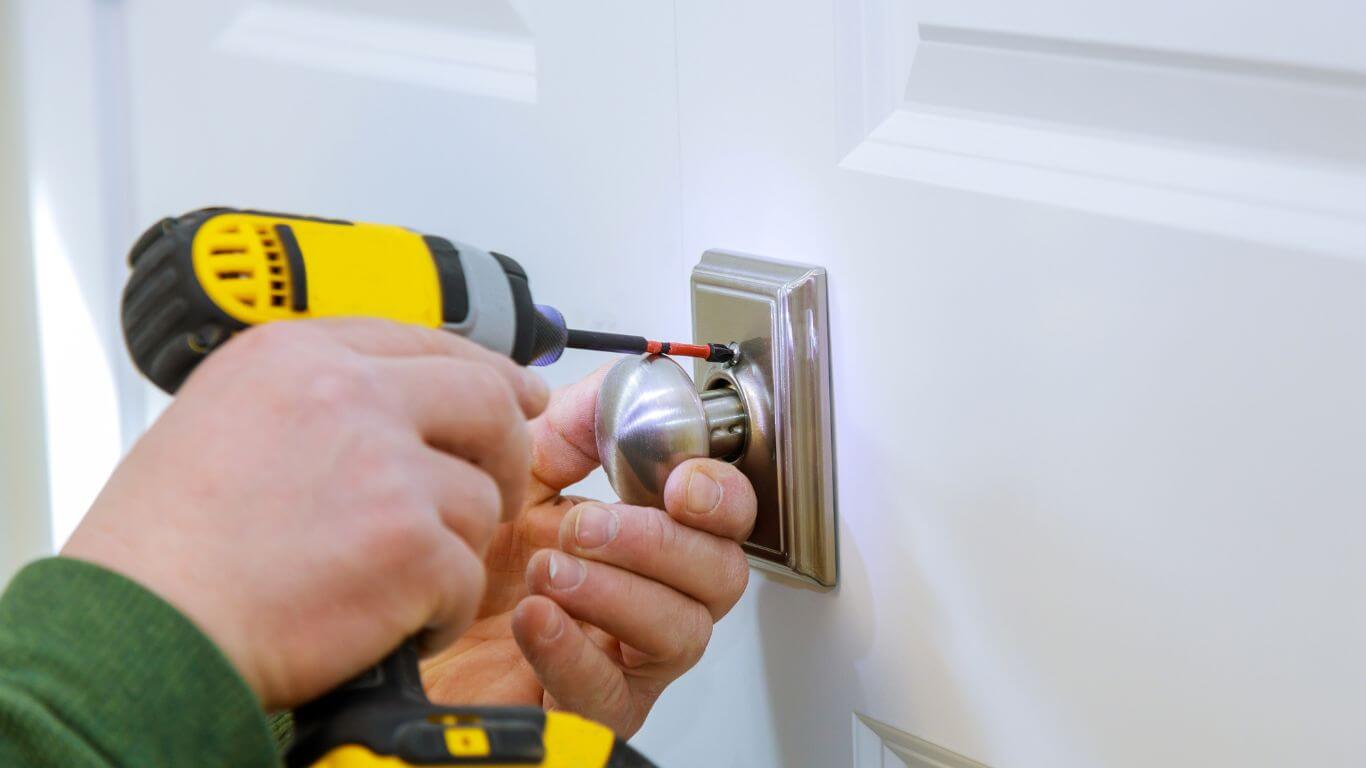
GTA Lockman Mobile Locksmith Services · Toronto & GTA
Latch, deadbolt, box, heavy-duty and electric strikes, and how a well-fitted strike strengthens the door.
Related services
Secure a forced door, repair damaged locks and frames, and document the work for your police report and insurer.
Learn moreLocks, frames and fire ratings on insulated residential and hollow metal commercial doors.
Learn moreKeep a shared entrance latching, releasing and letting people out, whichever release device is fitted.
Learn moreInvestigate why the door will not catch or release cleanly, including latch wear and frame alignment.
Learn moreLow-battery signs, the right batteries, and what to do if a keypad lock dies with you outside.
Learn moreAssess the lock strip, gearbox and door alignment as one system before choosing compatible repair parts.
Learn more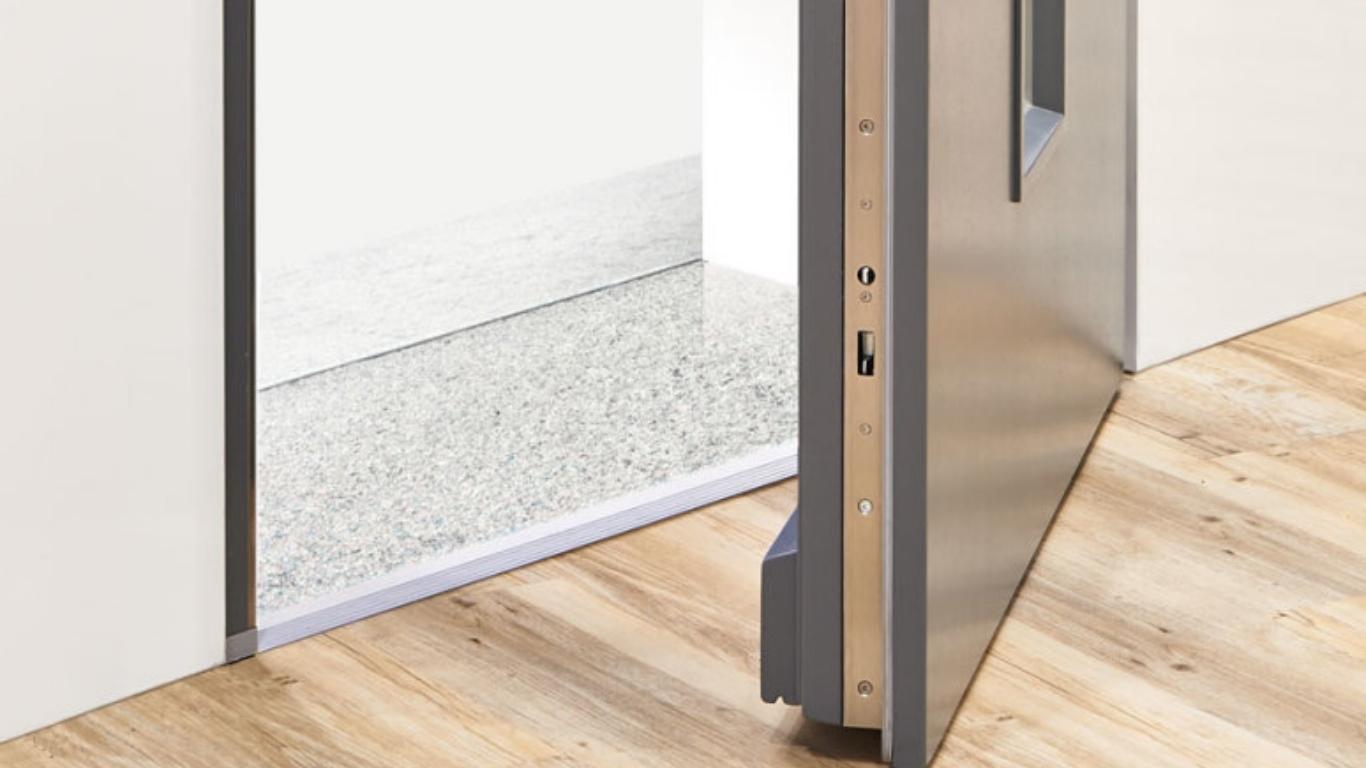
Every latch and deadbolt goes into a strike: the metal plate on the door frame with a hole for the bolt. It is easy to overlook, but the strike decides whether the door latches cleanly, whether the deadbolt throws fully, and how much force the frame can take before it splits. There are several types, and choosing the right one for each door matters.
Latch strikes. A flat plate with a curved lip that guides the latch bolt into the hole as the door closes. The lip should extend far enough to catch the latch, without sticking out so far that it scratches the frame or the door edge.
Deadbolt strikes. A flat plate with a round or rectangular hole for the bolt, often without a lip, since the deadbolt is thrown after the door is closed.
Both are typically fixed with short screws into the door jamb, which is the main weakness of standard residential strikes.
Heavy-duty strikes are thicker plates with longer screws that pass through the jamb into the wall framing behind it. They are one of the most effective and inexpensive security upgrades for any exterior door.
Box strikes have a metal box behind the plate that lines the bolt hole. The box prevents the bolt hole from crumbling and protects the frame from the bolt.
Long reinforcing plates extend well above and below the strike, spreading the force of an attack along more of the frame. They are often part of a door reinforcement kit and are commonly fitted after a break-in, as with lock repair after a break-in.
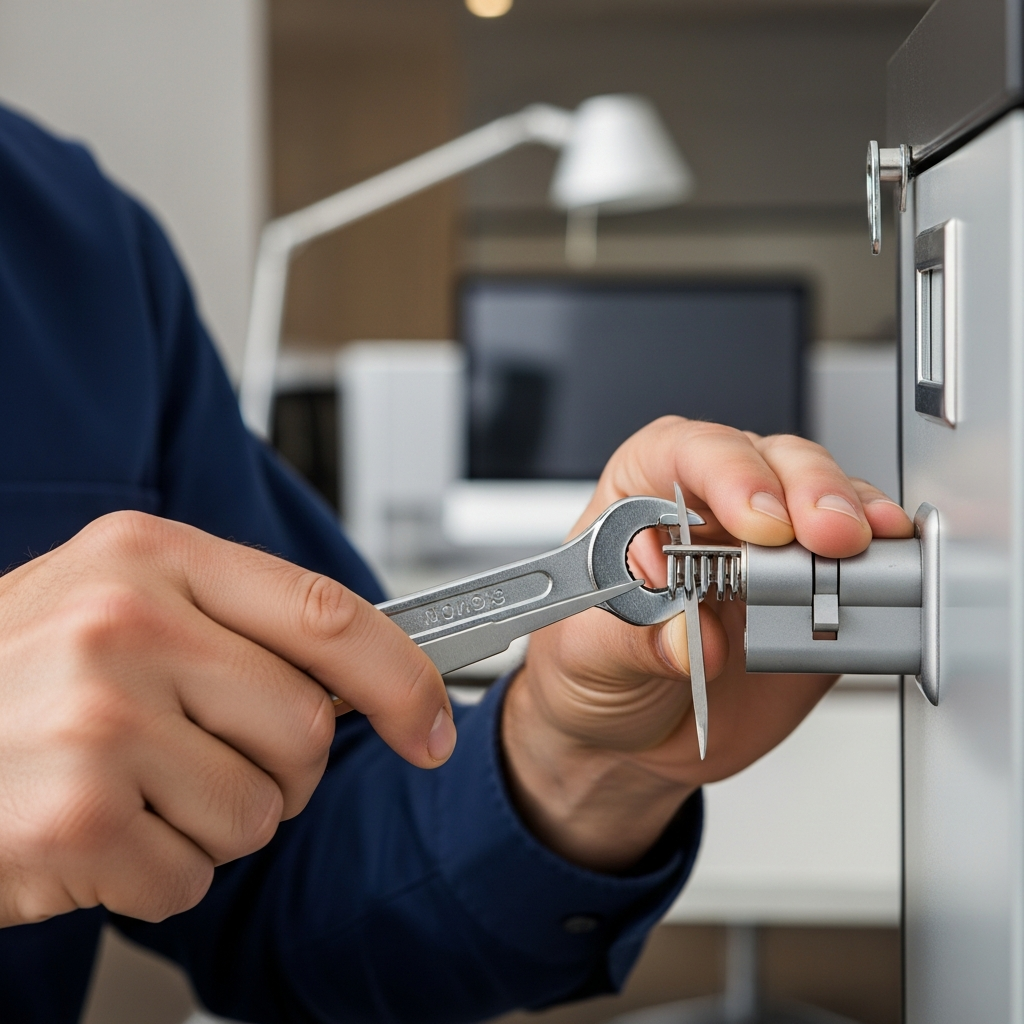
Commercial doors use standard strikes sized to the lock: ANSI-sized strikes for cylindrical and mortise locks, with box strikes and specific lip lengths to suit the frame. Steel frames are usually pre-prepared for a specific strike. Replacement strikes must match the frame preparation and, on fire-rated doors, keep the rating, as with steel doors and frames.
Electric strikes replace a standard strike with one that releases electrically, letting an access control system, buzzer or intercom unlock the door. They are common on building entrances and offices, and their wiring and alignment need care, as with buzzer and intercom entry for small buildings.
Some strikes have an adjustable tab or insert that changes how tightly the door is held against its stop. This is useful for stopping a door from rattling, or for taking up small movements as the house settles.
Photos
Photographs from GTA Lockman Mobile Locksmith Services work across Toronto and the GTA. Send a picture of your own door and we can tell you what the visit would involve.
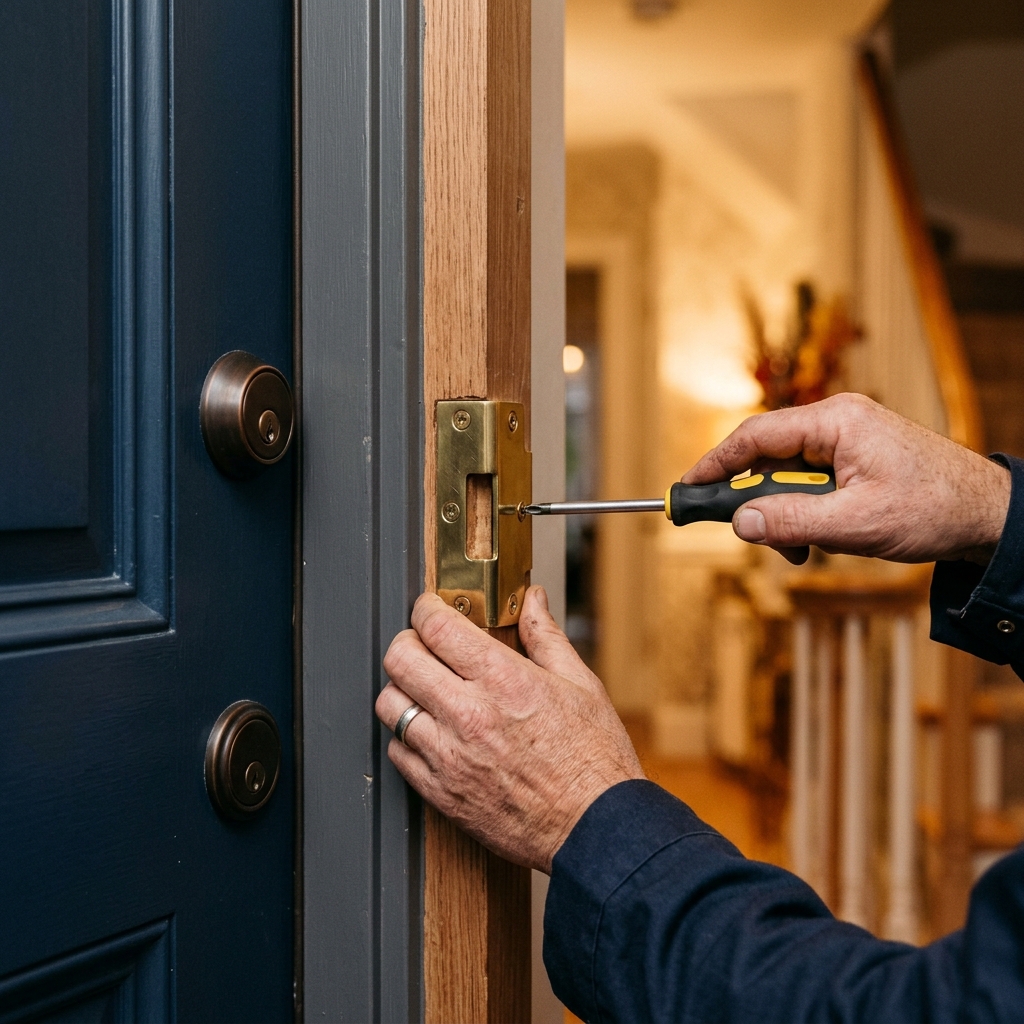
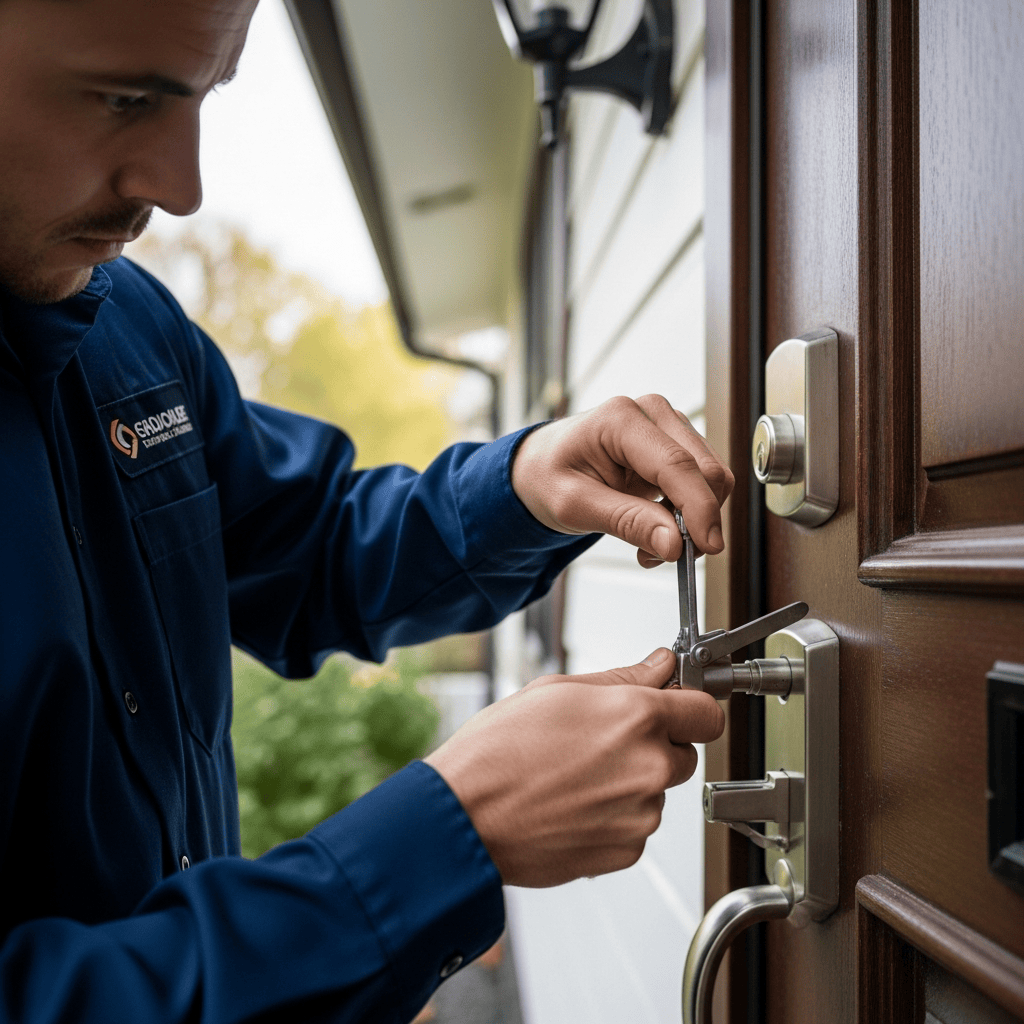
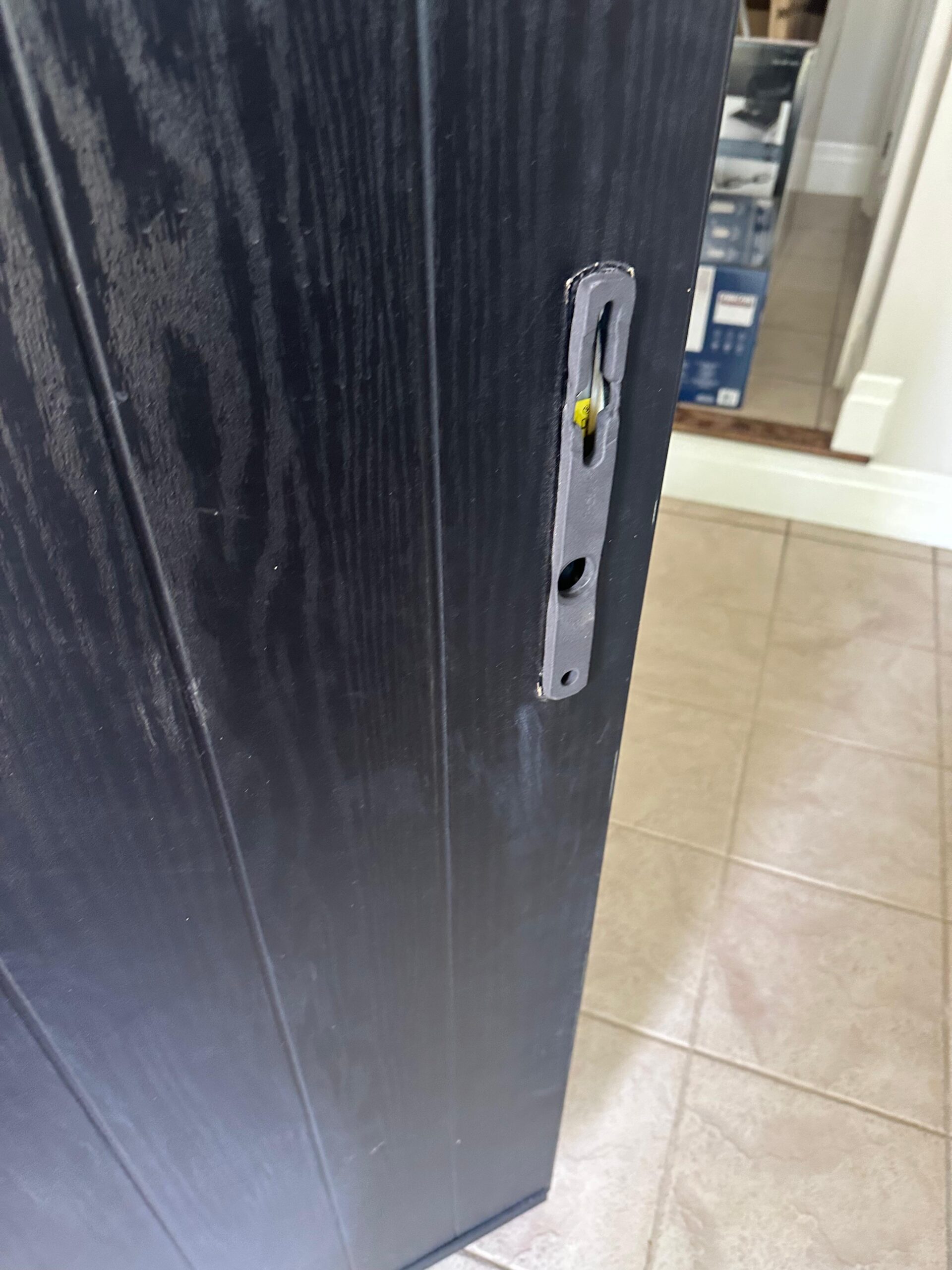
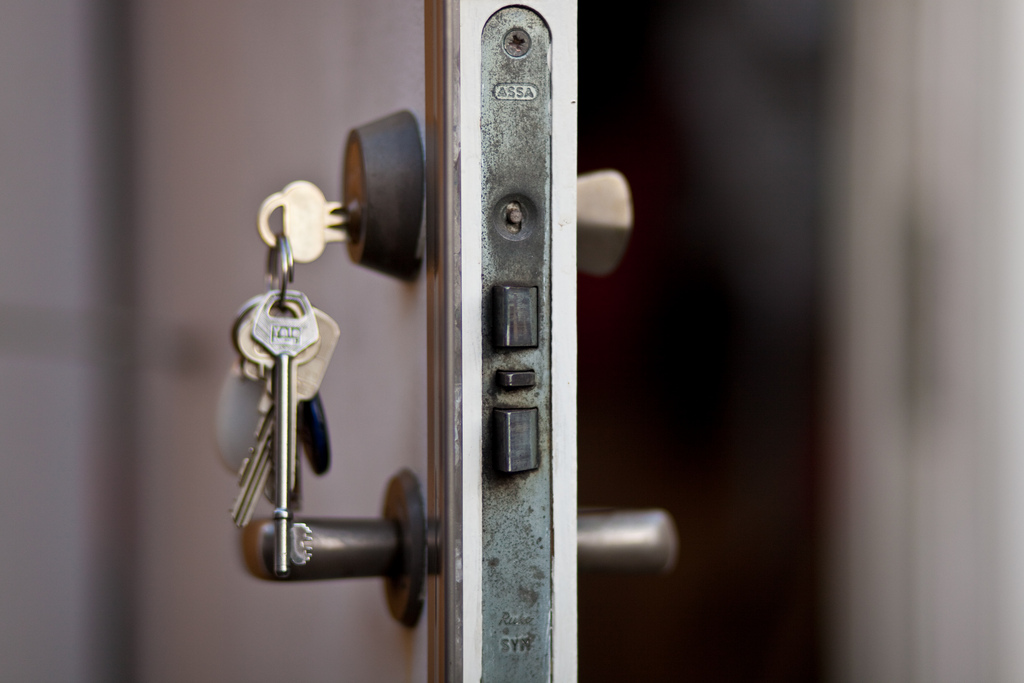
Most "lock" problems that appear when the door is closed, but not when it is open, are really strike problems:
The usual causes are a door that has moved, a strike fitted slightly out of position, a bolt hole that is too shallow, or screws that have loosened. The work involved is the core of door latch and strike plate repair.
Exterior doors: a heavy-duty or box strike with long screws into the framing, at minimum on the deadbolt.
Doors that have been forced: a long reinforcing plate, with the jamb repaired where it split.
Interior doors: a standard latch strike with a lip suited to the trim.
Double doors: the active leaf's strike is in the inactive leaf's edge, which must itself be bolted firmly.
Doors with access control: an electric strike matched to the lock and the system.
A strike fitted this way improves both the feel of the door and its resistance to force.
Smart and keypad deadbolts depend on a well-fitted strike. A bolt that rubs on the strike makes the motor strain, drains batteries and can stop the bolt short of full extension. Many smart lock problems are solved by adjusting or replacing the strike, as with keypad lock battery replacement.

Older frames often have several sets of strike holes from previous locks, and the wood around them may be split or patched. Fitting a new strike over damaged wood achieves little. Repairing the jamb, by gluing in a new section of wood or fitting a long reinforcing plate that spans the damage, gives the strike something solid to hold. The same applies to frames damaged in a forced entry.
Exterior doors have weather-stripping on the frame stop. When the weather-stripping is replaced with a thicker type, the door may sit further from the stop, and the latch may no longer catch the strike cleanly. Moving the strike slightly, or using an adjustable strike, compensates.
A latch strike's lip should reach far enough to guide the latch, but not so far that it catches on the door edge or scratches the trim. On doors with thick trim or a deep stop, a longer lip may be needed. On doors where the lip scrapes the paint, a shorter lip or a slight adjustment solves it.
Storm and screen doors use light latches and strikes, often on aluminium frames. These strikes loosen as the door is slammed by the wind. Tightening or replacing them, and adjusting the storm door closer so it shuts without slamming, keeps the latch catching reliably, as with other storm and screen door locks.
Gate latches use strikes or keepers on the gate post. Wooden posts move and twist with the seasons, so gate latches often stop catching. Adjustable keepers, or remounting the keeper as the post moves, keep the gate latching properly.
Once a year, look at each exterior door's strikes for loose screws, bright scuff marks showing where the bolt is rubbing, cracks in the surrounding wood, and paint build-up in the bolt hole. Each is a small fix if caught early.
Multipoint doors have a long strike or a series of keepers along the frame, one for each hook or bolt. All must line up for the lock to engage smoothly. When a multipoint door becomes stiff to lock, adjusting the keepers is usually the fix, as with multipoint lock repair. On double doors, the strike for the active leaf is fitted to the inactive leaf's edge, and the inactive leaf's flush bolts need their own keepers in the head and floor.
Smart deadbolts usually come with a strike, but the existing strike may already be correct. What matters is that the bolt slides in without rubbing. If the bolt touches the strike, the motor works harder, batteries drain sooner and the lock may report a jam. A strike with a slightly larger or deeper hole often solves it.
On accessible entrances, the latch and strike must release easily, so the door can be opened with little force. A latch that drags on the strike adds force. Keeping strikes aligned and lubricated is part of keeping an accessible door accessible, as with accessible entrance hardware.
Replace a strike when it is bent, cracked, worn through by the bolt, or when the screw holes behind it are stripped. A new heavy-duty strike with long screws into solid framing is a small cost for a significant improvement in how the door holds.
Where the old screw holes are stripped, filling them with glued hardwood plugs before fitting new screws gives them solid material to grip. Simply using larger screws in damaged holes rarely lasts.
On out-swinging doors, the latch sits on the outside face of the stop, and the strike is exposed. A latch guard, a metal plate fixed over the gap on the outside, protects the latch and strike from prying. Out-swinging doors also need security hinges, as with door hinges and security.
Narrow-stile aluminium storefront doors use hook-bolt deadlocks that engage a keeper in the frame rather than a standard strike. The keeper must be positioned and fixed precisely for the hook to swing fully into place. When a storefront lock will not engage, the keeper is often the cause.
Strikes come in finishes to match the door hardware. A strike in a different finish from the handle and deadbolt looks out of place on an otherwise matched door, so replacing it at the same time as the hardware keeps the look consistent.
Sometimes the latch misses the strike by only a millimetre or two. Filing the edge of the strike opening slightly, rather than moving the whole plate, can be enough. For larger misalignments, moving the strike or adjusting the hinges is the better fix.
Painting a frame often fills the strike's bolt hole and the latch opening with paint, and coats the strike itself. After painting, clear the hole and check that the latch and bolt still engage fully. Removing the strike before painting avoids the problem altogether.
Tell us which doors, what the latch and deadbolt are doing, and whether the door has been forced. Photographs of the strike and the door edge help.
We can fit heavy-duty and box strikes with long screws into the framing, add reinforcing plates, adjust or replace strikes so locks work smoothly, and fit electric strikes for access control. Household work is part of our residential locksmith services, and commercial doors are part of our commercial locksmith services.
Keep reading
The metal plate on the door frame with a hole for the latch or deadbolt. It guides the latch and holds the bolt when the door is locked.
The metal plate on the door frame with a hole for the latch or deadbolt. It guides the latch and holds the bolt when the door is locked.
A thicker strike fixed with long screws that pass through the jamb into the wall framing. It is one of the most effective security upgrades for an exterior door.
A strike with a metal box behind the plate that lines the bolt hole, protecting the frame and keeping the hole from crumbling.
The strike is probably out of line with the latch because the door has moved. Adjusting or moving the strike usually fixes it.
Yes. Adjustable strikes have a tab that holds the door tighter against its stop. Moving a standard strike slightly can do the same.
A strike that releases electrically, letting an access control system, buzzer or intercom unlock the door.
Not usually, but they need a well-fitted one. A bolt that rubs on the strike makes the motor strain and drains batteries.
Deep enough for the deadbolt's full throw, usually about one inch, so the bolt extends completely and deadlocks.
GTA Lockman Mobile Locksmith Services is a mobile locksmith working on homes, businesses and vehicles across Toronto and the GTA, with more than 14 years in the trade. Every review is written by a customer on Google, where you can read them in full.
Areas served: Toronto, North York, Scarborough, Etobicoke, Vaughan, Richmond Hill, Markham, Stouffville, Newmarket, Mississauga, Brampton, Oakville, Milton, Halton Hills, Pickering, Ajax, Whitby, Oshawa, Uxbridge.
Describe the door, hardware and service address. Contact GTA Lockman Mobile Locksmith Services to confirm the scope and scheduling for your location.