Locksmith services are always 10% off for seniors.
Open Mon–Thu 8:30 AM–9 PM, Fri 8:30 AM–4 PM, Sun 9:30 AM–9 PM
Locksmith services are always 10% off for seniors.
Open Mon–Thu 8:30 AM–9 PM, Fri 8:30 AM–4 PM, Sun 9:30 AM–9 PM
GTA Lockman Mobile Locksmith Services · Toronto & GTA
How fingerprint locks read, where they struggle, and what to check before fitting one to a GTA front door.
Related services
Separate a locked-door access problem from battery, alignment and account issues before resetting or replacing the device.
Learn moreWork through mechanical fit, power and supported controls when an electronic lock becomes unreliable.
Learn morePlan keyless entry around door compatibility, code management and a practical backup entry method.
Learn moreWhat Grade 1, 2 and 3 measure, what they leave out, and why the strike and frame often matter more.
Learn moreSet up entry for a child who arrives home first, without a key that goes missing every term.
Learn moreChoose levers, deadbolts and keys that an older person can operate reliably while keeping the home secure.
Learn more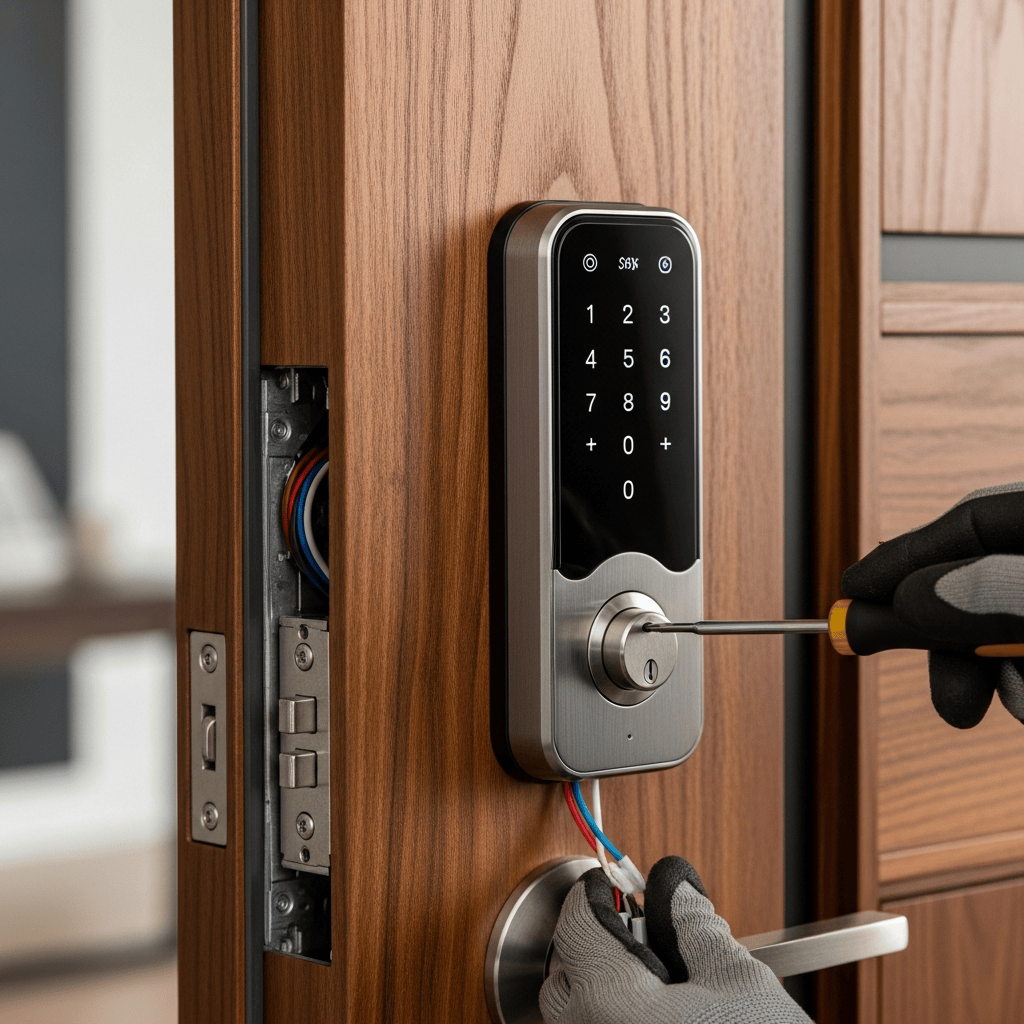
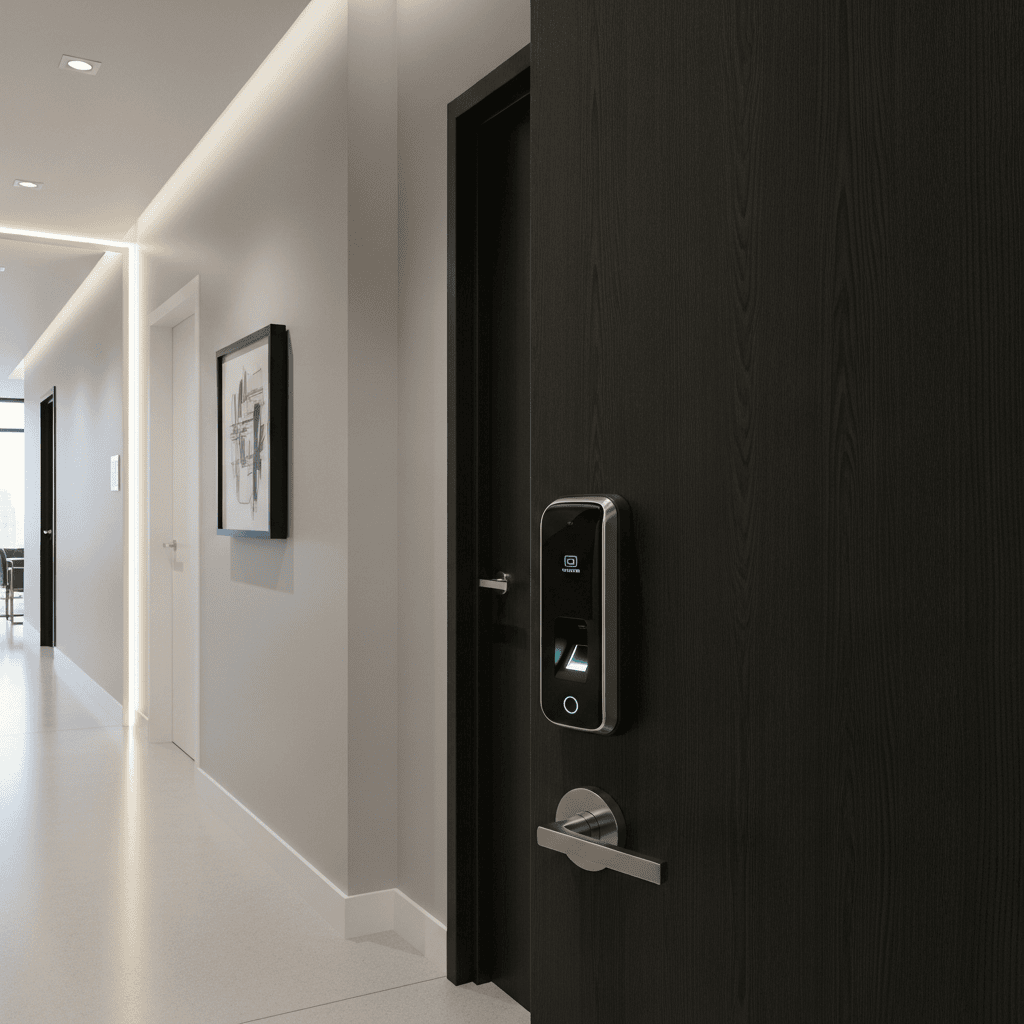
Fingerprint door locks let you unlock the door by placing a finger on a sensor. Most combine the fingerprint reader with a keypad, a phone app, or both, and almost all keep a mechanical key as a backup. For households tired of lost keys, or of sharing codes that end up with people they never meant to have them, a fingerprint lock is appealing: nobody can pass on a fingerprint the way they pass on a key or a code.
They work well when they are chosen and set up carefully. They also have particular quirks, most of them to do with the sensor, the batteries and the weather.
The lock stores a template made from each enrolled fingerprint, not a photograph of it. When someone touches the sensor, the lock reads the ridges, compares them with the stored templates and, if one matches, drives the bolt or releases the latch.
Most residential models have a motorised deadbolt or a motorised latch inside, powered by batteries in the inside housing. The outside unit carries the sensor, and often a keypad. Some connect to a home Wi-Fi network or a hub, which allows remote access and activity logs; others work entirely on their own.
Families with children. A child who loses keys regularly, or who is not yet ready to be trusted with a code, can simply use a finger. That suits families planning for children coming home alone after school.
Households with many regular visitors. Relatives, a caregiver or a cleaner can each be enrolled and removed individually, which is harder to do with keys.
People who struggle with keys. Someone with arthritis or limited grip may find a sensor easier than turning a key, although lever handles and other changes also help, as with easier-to-use door hardware for seniors.
Home offices and small businesses. Where a few people need a room or an entrance and the owner wants to know who came in, fingerprint access with a log is useful.
Wet, cold, dirty or damaged fingers. Sensors read ridges, and anything that changes those ridges affects reading. Wet or very cold hands, flour, paint, plaster dust, cuts and blisters can all cause failed reads. Many people enrol two or three fingers so they have an alternative.
Some people read poorly. Fingerprints wear with age and with certain types of work. Older people, tradespeople and anyone who handles abrasive materials may find that the sensor rejects them more often. A code or key backup matters for them.
Weather. An outside sensor in direct sun, driving rain or freezing conditions works harder than one in a sheltered porch. Winter in the GTA is a real test: a sensor covered in ice or frost may not read at all until it warms up.
Batteries. A motorised lock stops working when its batteries run out. Most warn in advance, and many have a way to supply temporary power from outside, but a warning ignored for weeks ends in a door that will not open electronically. The same failure pattern appears with other electronic locks, and the steps to take are similar to those for a smart lock that stopped working.
Look at more than the sensor.
Mechanical grade. The bolt, housing and strike still decide how well the door resists force. A fingerprint reader on a light-duty deadbolt is still a light-duty deadbolt. Cycle and strength testing behind lock grades applies to the bolt whatever reader sits in front of it.
Backup entry. A keyed cylinder, a keypad, or both. A key backup that is never tested may not work when it is needed, so try it now and then.
Weather rating. Some models are rated for outdoor exposure better than others. For an unsheltered door, that matters.
User management. How are fingerprints added and deleted? Can you tell whose finger opened the door and when? Can a user's access be limited to certain hours?
Door fit. Many fingerprint locks replace a standard deadbolt and fit the existing bore, but some need a thicker door, a particular backset or a mortise preparation. Measuring before ordering avoids surprises.
How a finger is enrolled makes a big difference to how reliably it reads later.
A residential fingerprint lock usually stores templates on the lock itself, not in the cloud, though connected models may sync settings or logs. Before buying, check where templates are stored, whether they can be exported, and how to wipe the lock completely. When a house is sold or a lock replaced, reset it to factory settings so no enrolled fingerprints remain.
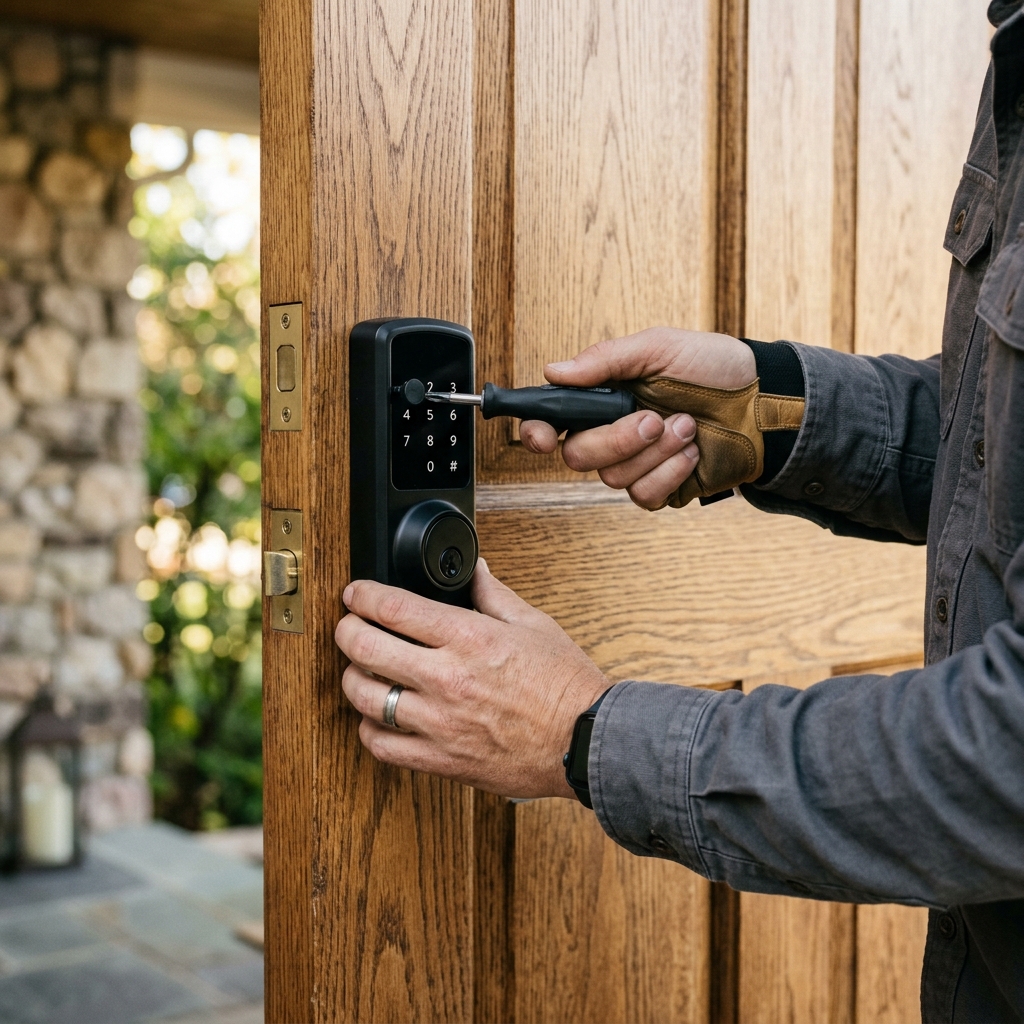
Fitting a fingerprint deadbolt is much like fitting any electronic deadbolt: the door must be aligned so the motor can throw the bolt without strain, and the strike must be positioned so the bolt enters cleanly. A motor fighting a misaligned strike drains batteries and eventually fails. That alignment work is the part of installation most often skipped, and it is the part that decides whether the lock lasts.
Once fitted, test the lock with the door closed from outside and inside, test the backup key, enrol users, and check the battery warning works.
If the sensor stops recognising fingers, try the simple steps first: clean the sensor with a soft cloth, dry and warm your hands, and try another enrolled finger. If none of those work, use the keypad or key backup and change the batteries. If the lock still does not read, the sensor or the electronics may have failed, and repairing it depends on the model, as with any smart lock repair.
Fingerprint locks are popular with owners of short-term rentals and landlords of long-term units, because access can be added and removed without handing out keys. In practice, most rental hosts rely on codes rather than fingerprints, since a guest cannot be enrolled until they arrive. Fingerprints suit long-term tenants and family members better.
In a long-term rental in Ontario, changing the locking system on a unit door needs the other party's consent, whichever side makes the change, and a fingerprint lock is no exception. Both landlord and tenant should agree on who is enrolled, who can add users and how the landlord gets access when proper notice has been given.
In a small office, clinic or studio, a fingerprint lock on the entrance or on a records room lets a few staff in without keys and records who opened the door. For larger numbers of users, or where access needs to change often, a card or fob access control system is usually easier to manage. Fingerprint readers on busy commercial doors wear reliable and read less reliably when many people use them each day.
When a fingerprint lock reaches the end of its life, or a model is discontinued, check whether a newer model from the same maker fits the existing preparation. Many do, which avoids new holes in the door. Reset the old lock to factory settings before disposing of it, so no user data remains.
Fingerprint locks are one of several ways to open a door without a key. Some newer locks use face recognition, some use a card or fob, and many use a phone app or proximity. Each has its own weak points: face recognition can struggle in bright sunlight or darkness, cards and fobs can be lost, and phone-based unlocking depends on the phone and its battery. Many households end up choosing a lock that combines two or three methods, so there is always another way in when one fails.
Every few months, check the battery level in the app or on the lock, clean the sensor, try the backup key, and review the list of enrolled users. Remove anyone who no longer needs access. A lock that has gradually started taking several attempts to read may need fingers re-enrolled or the sensor cleaned more carefully.
Older family members may find fingerprint locks easier than keys, but their fingerprints often read less reliably, since ridges become finer with age. Enrolling several fingers, enrolling carefully with warm hands, and keeping a simple keypad code as a backup make the lock usable for them. A lever handle alongside the lock also helps anyone with limited grip.
If you are moving and want to take a fingerprint lock with you, fit a standard deadbolt in its place so the house is not left without a lock, and reset the fingerprint lock before refitting it at the new house. Most buyers expect the locks to stay, so agree it in the sale terms first.
Tell us which door, what is currently fitted, whether the door is sheltered, and who will use it. Photographs of the door edge and both faces help confirm what will fit.
We can supply and fit the lock, align the door and strike so the motor runs freely, enrol users and show you how to add and remove them, and key the backup cylinder to your existing house key where the model allows. Keypad-only options are also worth comparing, since keypad locks avoid the sensor issues entirely.
Keep reading
The fingerprint reader controls who can open the lock, but the bolt, housing and strike decide how well the door resists force. A fingerprint lock with a sturdy deadbolt, fitted to a well-aligned door with a reinforced strike, is a sound choice for most homes.
The fingerprint reader controls who can open the lock, but the bolt, housing and strike decide how well the door resists force. A fingerprint lock with a sturdy deadbolt, fitted to a well-aligned door with a reinforced strike, is a sound choice for most homes.
The lock stops working electronically. Most warn well in advance, many allow temporary power from outside, and almost all have a mechanical key backup. Test the backup key now and then so you know it works.
Wet, cold, dirty or cut fingers read poorly. Clean the sensor, dry and warm your hands, or try another enrolled finger. Enrolling two or three fingers per person helps.
A sensor covered in frost or ice may not read until it warms. Sheltered doors fare better. A keypad or key backup is important for unsheltered doors in the GTA's winters.
Yes, and it removes the problem of lost keys. Children's fingers grow, so re-enrol them every year or two to keep recognition reliable.
Most residential locks store encoded templates on the lock itself rather than images of fingerprints. Connected models may sync settings or logs. Check the manufacturer's information, and reset the lock to factory settings when you move.
Many replace a standard deadbolt and fit the existing bore, but some need a particular door thickness or preparation. Photographs and measurements of the door edge confirm fit before anything is ordered.
On many models, yes. The backup cylinder can often be rekeyed to the existing house key, so one key still opens every exterior door.
GTA Lockman Mobile Locksmith Services is a mobile locksmith working on homes, businesses and vehicles across Toronto and the GTA, with more than 14 years in the trade. Every review is written by a customer on Google, where you can read them in full.
Areas served: Toronto, North York, Scarborough, Etobicoke, Vaughan, Richmond Hill, Markham, Stouffville, Newmarket, Mississauga, Brampton, Oakville, Milton, Halton Hills, Pickering, Ajax, Whitby, Oshawa, Uxbridge.
Describe the door, hardware and service address. Contact GTA Lockman Mobile Locksmith Services to confirm the scope and scheduling for your location.