Locksmith services are always 10% off for seniors.
Open Mon–Thu 8:30 AM–9 PM, Fri 8:30 AM–4 PM, Sun 9:30 AM–9 PM
Locksmith services are always 10% off for seniors.
Open Mon–Thu 8:30 AM–9 PM, Fri 8:30 AM–4 PM, Sun 9:30 AM–9 PM
GTA Lockman Mobile Locksmith Services · Toronto & GTA
How aluminium storefront doors lock, which parts wear out, and what an exit door must still allow.
Related services
Narrow-stile deadlocks, hook bolts and euro cylinders on condo, townhouse and terrace doors.
Learn moreSecure the premises at closing while keeping exit routes working, and fix the closer, alignment or lock fault behind it.
Learn moreAuthorized entry to shops, restaurants, clinics and offices, with attention to storefront hardware and key control.
Learn moreWhat each type of exit device does, how the outside trim and dogging change its behaviour, and what has to stay true on every exit.
Learn moreMake the back door close, latch and lock every time while keeping it a safe exit for staff and customers.
Learn moreHow commercial lock and door work gets scoped, authorized and scheduled around a business that has to keep trading.
Learn more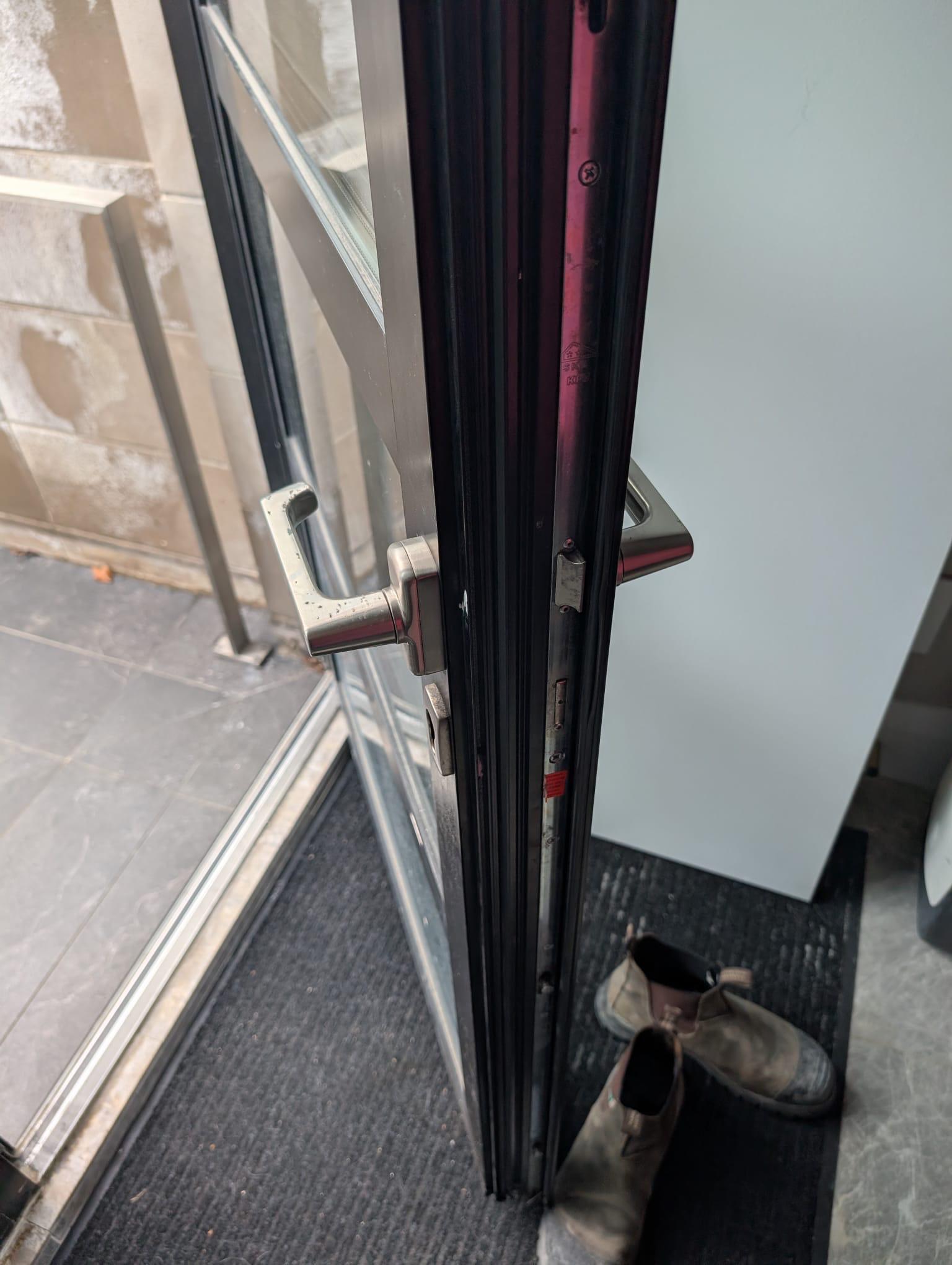
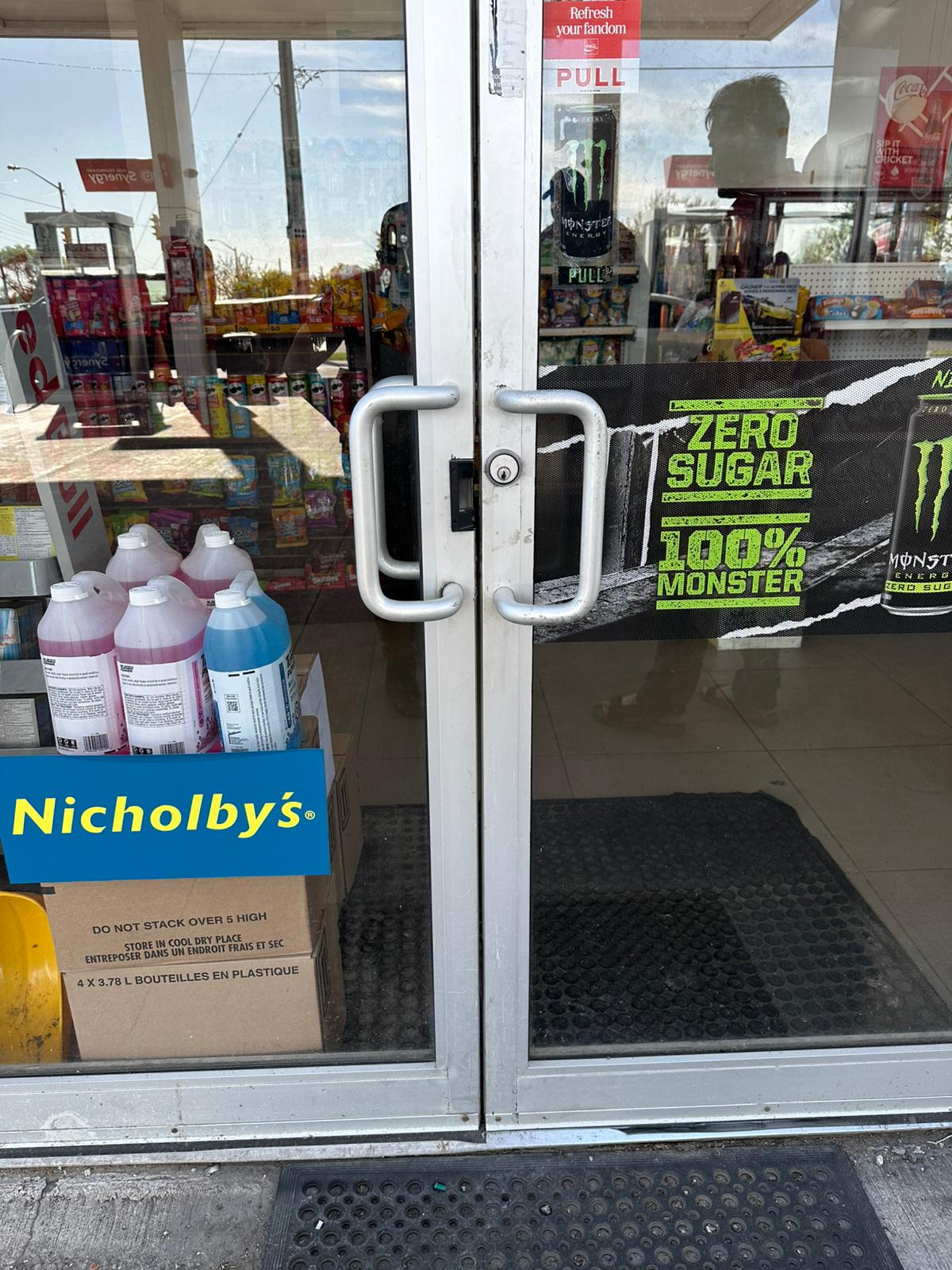
Most storefronts in the GTA use aluminium-framed glass doors. The frame members around the glass are called stiles, and on a storefront door they are narrow, often about 2 inches, sometimes less. That leaves very little room for a lock, so storefront doors use hardware designed specifically to fit inside a narrow stile rather than the deadbolts and knobs found on houses.
A typical storefront door has four parts that matter to security:
When any one of these is out of adjustment, the lock struggles. Most storefront lock problems are really door problems.
The most common storefront lock is a narrow-stile deadlock with a swinging hookbolt. Turning the key swings a curved bolt out of the stile and into the frame, where it hooks behind the strike. Because the bolt hooks rather than slides, it resists the door being pried away from the frame. Adams Rite is the brand most people associate with this type, and similar locks are made by several manufacturers. See Adams Rite locks.
These locks are reliable when the door hangs true. When the door sags, the hookbolt rubs or misses the strike, the key gets hard to turn, and staff start to force it. The fix is usually adjusting the pivots or closer and resetting the strike, not a new lock.
Many storefront doors also have a latch, so the door stays shut when people pull on it during the day. This is usually a narrow-stile deadlatch operated by a paddle, a push bar or a lever on the inside and a pull handle and cylinder outside. Some combine a latch and a deadbolt in one body.
A latch that does not catch is one of the most common calls from shops at closing time. The cause is usually the closer, which is no longer bringing the door fully home, or a strike that has moved. The full troubleshooting is on commercial door will not lock at closing.
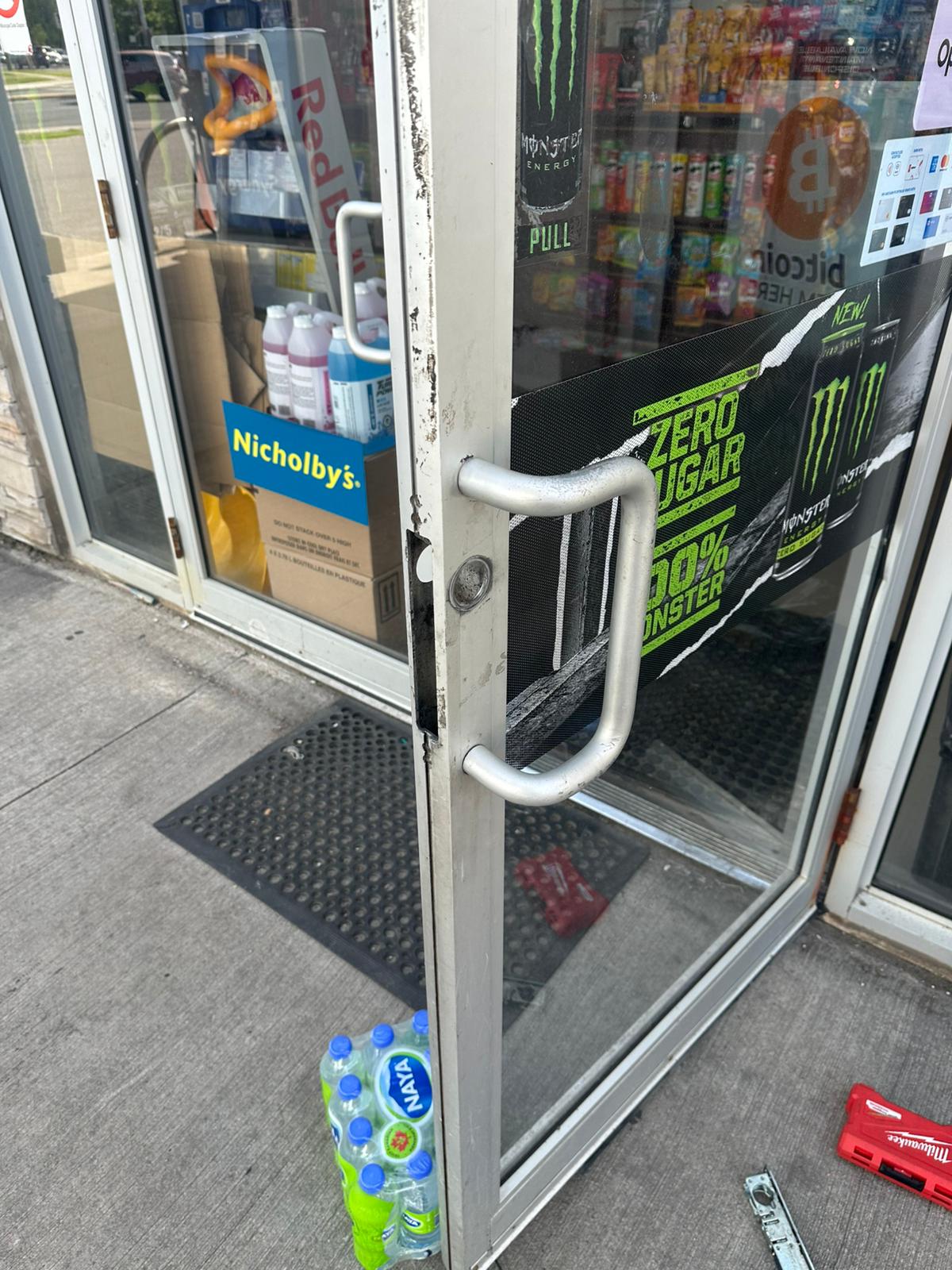
Storefront locks use mortise cylinders, which are threaded into the lock body and held with a set screw. They come in several lengths, and the length has to suit the thickness of the stile and any trim or guard ring. A cylinder that sticks out too far is easier to grip and twist with a tool. A cylinder that is too short may not engage the cam properly.
The cam at the back of the cylinder is specific to the lock body. Fitting the wrong cam is a common reason a new cylinder turns but does not throw the bolt.
Useful upgrades include:
A storefront door is often also an exit. Building and fire codes in Ontario generally require that a required exit can be opened from the inside without a key, a tool or special knowledge. That affects which locks are acceptable.
In practice:
When in doubt, ask the building owner or the local fire prevention office before changing how an exit door locks. We will not fit hardware that stops a required exit from releasing.
Many storefronts now use a fob reader, a keypad or a buzzer at the entrance. On aluminium doors this usually means an electric strike in the frame or an electrified lock body, with a power supply and a release on the inside. The mechanical cylinder remains as an override.
Things to plan for:
Building-entrance access is covered on buzzer and intercom entry for small buildings and accessible entrances for businesses.
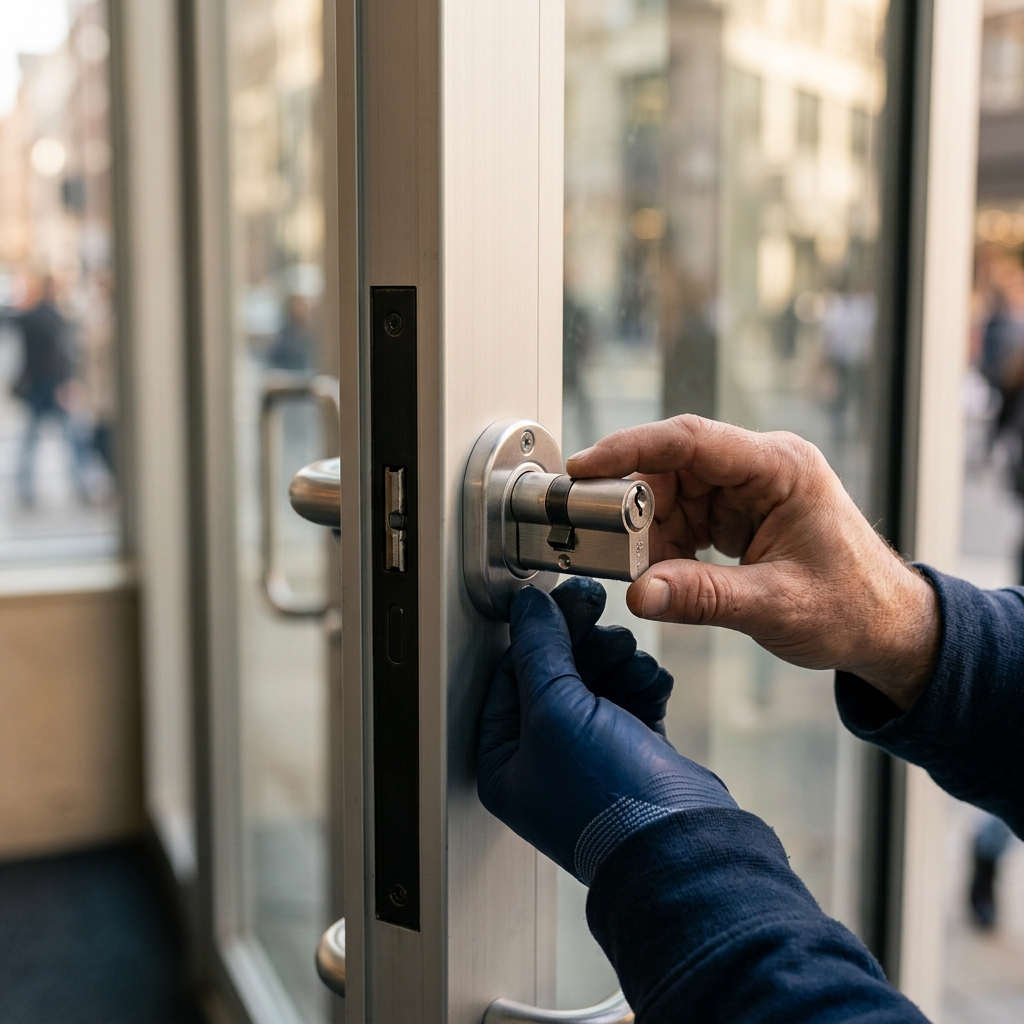
Narrow aluminium doors on homes and condo terraces use related hardware, covered on aluminium and glass door locks.
The front door is the one customers see. The rear door, the stockroom and the cash office are often where losses happen. A storefront plan should include the steel back door, its latch guard and closer, and who holds keys to each. See rear door security for shops and restaurants and, for lockouts, storefront lockout service.
Photograph the lock body face on the edge of the door, the cylinder from outside, and the top and bottom of the door. Note the brand if it is stamped on the faceplate. With those, the right cylinder length, cam and parts can usually be identified before the visit.
Keep reading
Usually a narrow-stile deadlock with a swinging hookbolt, often combined with a deadlatch. Both fit inside the narrow aluminium stile.
Usually a narrow-stile deadlock with a swinging hookbolt, often combined with a deadlatch. Both fit inside the narrow aluminium stile.
Usually the door has dropped or the strike has moved, so the bolt rubs the frame. Adjusting the pivots, closer and strike normally fixes it.
Not on a standard narrow-stile door. There is not enough room in the stile, so storefront doors use narrow-stile lock bodies and mortise cylinders.
It depends on whether the door is a required exit and on the occupancy. Codes generally require exits to open from inside without a key. Check with the building owner or fire prevention office.
Yes. Mortise cylinders can be rekeyed like other pin-tumbler cylinders, which is usually the simplest response to staff changes.
A ring or collar around the cylinder that spins or covers the face, so the cylinder cannot easily be gripped and twisted.
Usually. It normally means an electric strike in the frame or an electrified lock body, a power supply and an inside release, with the key cylinder kept as an override.
The latch is not engaging, usually because the closer is not bringing the door fully closed. Adjusting the closer and strike usually solves it.
GTA Lockman Mobile Locksmith Services is a mobile locksmith working on homes, businesses and vehicles across Toronto and the GTA, in the trade since 2010. Every review is written by a customer on Google, where you can read them in full.
Areas served: Toronto, North York, Scarborough, Etobicoke, Vaughan, Richmond Hill, Markham, Stouffville, Newmarket, Mississauga, Brampton, Oakville, Milton, Halton Hills, Pickering, Ajax, Whitby, Oshawa, Uxbridge.
Describe the door, hardware and service address. Contact GTA Lockman Mobile Locksmith Services to confirm the scope and scheduling for your location.