

GTA Lockman Mobile Locksmith Services · Toronto & GTA
Car Key Identification Chart: Types of Car Keys
Mechanical, transponder, remote, laser-cut and proximity keys: how each works and what replacing one involves.
Related services
Services often booked with this one.
Worn Keys and Poor Key Copies
Why a key that worked for years starts to stick, and when the key rather than the lock is the problem.
Learn moreKey Codes and the Numbers on Your Key
Blank references, cut codes and registration numbers: what they reveal, and how to keep them private.
Learn moreProving You Are Entitled to Enter
What a locksmith has to establish before opening a door, and what to have ready so the visit is not wasted.
Learn more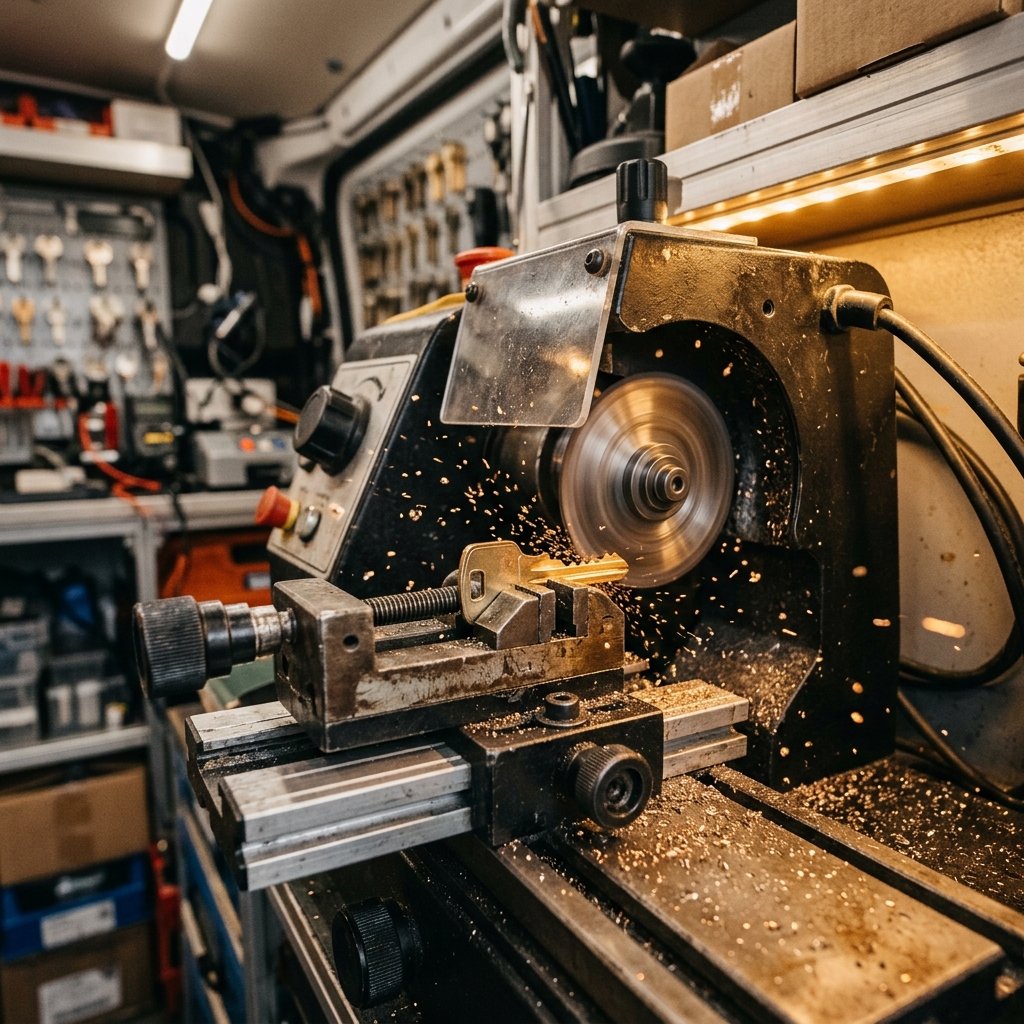
Why the type of key matters
The type of key your vehicle uses decides almost everything about replacing it: whether a copy can be cut on site, whether it needs programming, whether the work can be done at your location, and roughly what it costs. Two keys that look similar can be very different jobs, because the important part is often the electronics inside the head rather than the metal blade.
This guide describes the key types found on cars, SUVs, vans and light trucks on Ontario roads, how to tell which one you have, and what replacing each involves. For booking a replacement, see car key replacement.
Car Key Identification Chart
Use this chart to find your key type. The photos show Honda keys as examples, and keys from other makes look different. Each type is explained below.
| Example | Key type | How to identify it | What replacing it involves |
|---|---|---|---|
| No photo | Mechanical key | Plain metal key with cuts along the edge and nothing inside the head. | Cutting only. |
 | Transponder key | Plastic head with a chip inside. It may have no buttons. | Cutting and programming. |
 | Remote head key | Blade and buttons in one piece. Some have a folding blade. | Cutting, then pairing the chip and the remote. |
 | Laser-cut key | Thicker blade with a groove cut into its face. | Cutting on a suitable machine and programming. |
 | Smart key | Fob for a car with a start button. It often holds a small emergency blade. | Programming the fob to the car. |
A plain metal key with cuts along one or both edges, and nothing inside the head. These were standard until the late 1990s and still turn up on older vehicles, trailers and some work vehicles.
A mechanical key can be cut from the existing key, from the key code, or by decoding the door or ignition lock. Because nothing has to be programmed, it is the simplest key to replace. On a modern vehicle, a plain metal key is usually only the emergency blade hidden inside a fob.
Transponder keys
A transponder key has a small chip in the plastic head. When the key is in the ignition, the vehicle reads the chip, and the immobilizer allows the engine to start only if it recognizes it. Canadian rules have required electronic immobilizers on most new passenger vehicles since 2007, and many vehicles had them earlier, so most keys now on the road contain a chip even if they have no buttons.
Can you tell a car key by its colour? Not reliably. Some makers use a coloured head or a coloured dot to tell keys apart, but the colour of the plastic usually says nothing about the chip inside. To identify a key, look at the blade shape, the buttons and the make and year of the car, or send us a photo.
Replacing a transponder key involves two steps: cutting the blade and programming the chip to the vehicle. A key with the wrong chip, or one that has not been programmed, will open the doors but will not start the engine. Some chips can be cloned from an existing key; others have to be added to the vehicle's memory with a programming tool. See car key programming.

Remote head and flip keys
A remote head key combines the transponder and the lock and unlock buttons in one head. A flip key, sometimes called a switchblade key, is the same idea with a blade that folds into the fob.
These need three things done: the blade cut, the transponder programmed for starting, and the remote programmed for the buttons. On some vehicles the remote and the transponder are programmed separately, so a key can start the car while the buttons do nothing, or the reverse. Worn flip mechanisms and cracked shells can often be replaced without replacing the electronics.
Laser-cut keys
Laser-cut keys, also called high-security, sidewinder or internal-cut keys, have a groove milled into the flat face of the blade instead of notches cut into the edge. They are thicker, harder to copy and fit locks with tighter tolerances. Many European and Japanese vehicles use them, and so do a growing number of others.
They need a key machine that can mill the pattern, and usually a transponder as well. A worn laser-cut key can sometimes be recut from the vehicle's key code rather than copied, which gives a cleaner key than duplicating the wear.
A proximity key stays in your pocket or bag. The vehicle detects it nearby, unlocks the door when you touch the handle, and lets you start the engine with a button. Inside most smart keys is a small mechanical blade for the door lock in case the battery dies.
Replacing a smart key means programming a new fob to the vehicle, which on many models requires security access through a diagnostic tool. Adding a spare while you still have one working key is usually simpler and less expensive than replacing the last key. When the fob battery is flat, most vehicles still start if you hold the fob against the start button or place it in a marked spot, which the owner's manual describes. Range and battery problems are explained on why your car key fob has poor range, and push-button vehicles on keys for push-to-start vehicles.
Key cards and phone keys
Some newer vehicles use a credit-card-sized key, or let a phone act as the key through the manufacturer's app. These are usually set up and managed through the dealer or the manufacturer's account rather than cut or programmed by a locksmith. If the vehicle also has a conventional fob, that fob can often be replaced in the usual way.
Valet keys and spares
Some vehicles come with a valet key that starts the engine and opens the doors but not the trunk or glovebox. It is a full transponder key in every other respect, so if it is lost it should be treated like any other key.
A spare is worth having. When every key is lost, the vehicle often has to have its key memory reset or rebuilt, and on some models that takes longer or needs dealer involvement. Duplicating a working key costs less. See car key duplication.
Whatever the type, a replacement starts with the same information:
- The vehicle. Make, model, year and VIN. The VIN tells the technician which key, chip and programming method the vehicle uses.
- Proof of ownership. Registration or ownership documents, and identification that matches. No key is made without them. See proving you are entitled to enter.
- Whether you have a working key. Adding a key is simpler than replacing the last one.
- Where the vehicle is. Mobile service means the work happens beside the vehicle, but it has to be somewhere the technician can safely work.
Keys bought online can sometimes be programmed, but many are the wrong frequency, have already been locked to another vehicle, or use a chip the vehicle will not accept. See can you program a car key or fob bought online. Very low-priced replacements carry their own risks, set out in this article on low-cost car key replacement.
Lost every key
If no working key is left, the job is still usually possible: the key is cut by code or by decoding a lock, and the vehicle's key memory is reprogrammed so the lost keys no longer start it. The practical steps are on lost car keys with no spare. For a key locked inside the vehicle rather than lost, see car lockout service.
Keep reading
Related pages across the site
Questions about car key types: a guide to modern vehicle keys
If the vehicle is from the late 1990s or newer, it very likely does, even with no buttons. A key code, the owner's manual or a technician reading the key will confirm it.
How do I know if my car key has a chip?
If the vehicle is from the late 1990s or newer, it very likely does, even with no buttons. A key code, the owner's manual or a technician reading the key will confirm it.
Why does my copied key open the door but not start the car?
The blade was cut, but the transponder chip was missing, wrong or not programmed. The immobilizer will not allow the engine to start until the chip is recognized.
What is a laser-cut key?
A key with a groove milled into the flat face of the blade instead of notches on the edge. It needs a specific key machine to cut.
Can a smart key be replaced without the dealer?
Often, yes. Many proximity keys can be programmed on site with the right tool. Some models or model years still require dealer involvement, which the VIN helps identify.
What happens if my smart key battery dies?
Use the blade hidden inside the fob to open the door. Most vehicles will still start if you hold the fob against the start button or in a marked spot described in the manual.
Is it cheaper to add a spare than to replace a lost key?
Usually. Adding a key while one still works is simpler than replacing the last key, which can require resetting the vehicle's key memory.
What do I need to get a replacement car key?
The make, model, year and VIN, plus registration or ownership documents and matching identification.
Can a key bought online be programmed?
Sometimes. Many online keys use the wrong chip or frequency, or have already been locked to another vehicle, so check before buying.
Reviews from GTA Lockman Mobile Locksmith Services customers
GTA Lockman Mobile Locksmith Services is a mobile locksmith working on homes, businesses and vehicles across Toronto and the GTA, in the trade since 2010. Every review is written by a customer on Google, where you can read them in full.
Areas served: Toronto, North York, Scarborough, Etobicoke, Vaughan, Richmond Hill, Markham, Stouffville, Newmarket, Mississauga, Brampton, Oakville, Milton, Halton Hills, Pickering, Ajax, Whitby, Oshawa, Uxbridge.
Plan your locksmith visit
When you call, tell us the type of door, the lock you have now and the service address. Contact GTA Lockman Mobile Locksmith Services to confirm the scope and scheduling for your location.
Friday: 8:30 AM–4:00 PM
Sunday: 9:30 AM–9:00 PM
Saturday: closed