Locksmith services are always 10% off for seniors.
Open Mon–Thu 8:30 AM–9 PM, Fri 8:30 AM–4 PM, Sun 9:30 AM–9 PM
Locksmith services are always 10% off for seniors.
Open Mon–Thu 8:30 AM–9 PM, Fri 8:30 AM–4 PM, Sun 9:30 AM–9 PM
GTA Lockman Mobile Locksmith Services · Toronto & GTA
Keep units, gates and the office secure while tenants come and go on their own schedule.
Related services
Identify the unit, lock format and facility requirements before arranging authorized access to stored belongings.
Learn moreMatch the padlock to the hasp, door and hinges, and keep shed, gate and garage keys under control.
Learn moreHow commercial lock and door work gets scoped, authorized and scheduled around a business that has to keep trading.
Learn moreStore, label and log keys so the set still makes sense after three staff changes.
Learn moreLock and door service for offices, shops and managed properties. Plan access around the way your business operates.
Learn moreMake the back door close, latch and lock every time while keeping it a safe exit for staff and customers.
Learn more
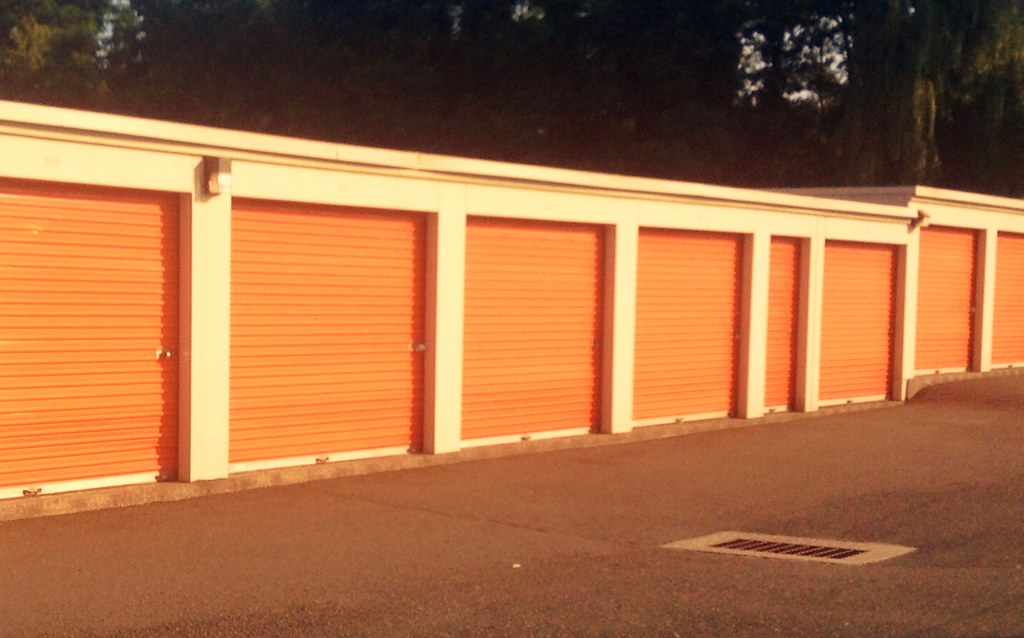
A self-storage facility is an unusual building to secure. Dozens or hundreds of tenants arrive on their own schedules, each with access to one unit and no other. Gates, perimeter doors, corridors, the office and every unit door all need to work together, and the facility operator needs to keep control of the whole site without holding keys to tenants' belongings.
The hardware choices, the key and code arrangements, and the policies around lockouts all shape how well that works.
At most facilities, the tenant supplies and holds the lock on their own unit. That keeps the operator out of the question of what is inside and who can get to it.
The lock type still matters. Disc padlocks and cylinder locks designed for storage doors resist cutting far better than ordinary padlocks, and many facilities require or recommend a particular type. Where the unit door has a latch designed for a specific lock, a padlock that does not fit it properly leaves a gap.
The hasp and its fixings matter as much as the padlock. A strong lock on a hasp held by short screws is only as strong as the screws; the same principle applies to shed, garage and outbuilding padlocks.
Tenants lose keys and forget combinations. Most facilities have a policy for this: the tenant proves who they are, the operator confirms they are the tenant of record, and the lock is removed in the presence of the tenant or a staff member.
That process protects the facility as much as the tenant. The operator should never cut a lock on the word of someone who cannot show they rent the unit. From the tenant's side, the same situation is the everyday work of a storage unit lockout.
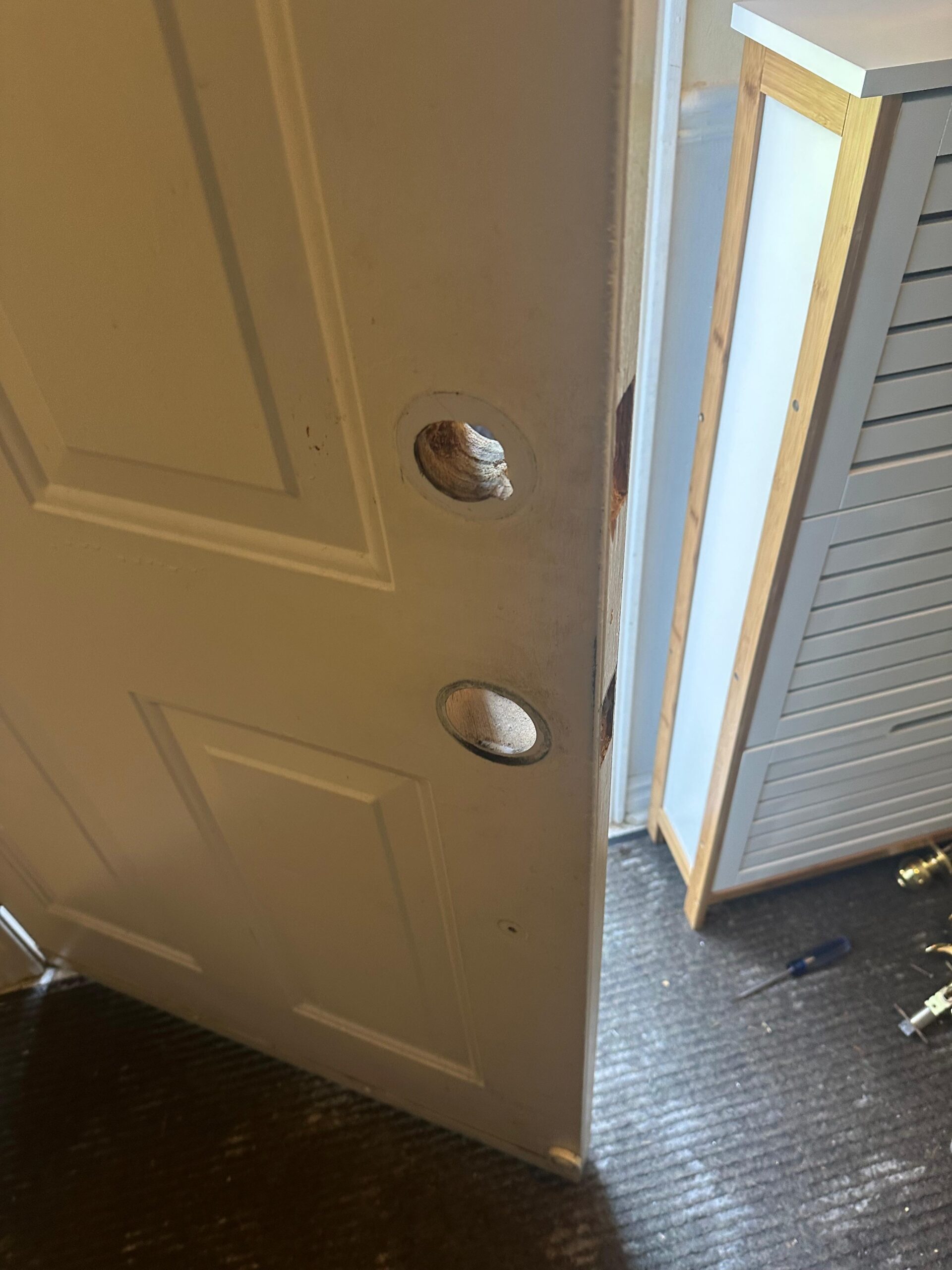
Many facilities use an overlock, a second lock placed on the unit by the operator, when rent falls behind. The rules around overlocking, notice and eventual lien sales are set by the rental agreement and provincial law, not by the locksmith.
What matters on the hardware side is that the overlock fits the unit door securely and that the facility keeps a clear record of which units are overlocked and when.
The perimeter is where most facilities invest in access control. A gate or entrance door with a keypad, card reader or app lets tenants in during access hours and keeps others out.
Each tenant should have their own code or credential, so access can be switched off when a tenancy ends or rent is unpaid, and so the system records who came in and when. Shared codes that every tenant knows efficiently become codes that everyone else knows too.
The mechanical backup matters as well. When the power fails or the system breaks, staff need a way in, and the fire service needs a way in; that is the job of emergency access and key boxes for buildings, kept separate from the tenant system.
Indoor facilities add corridor doors, elevator access and sometimes floor-by-floor controls. Corridor doors on fire separations must close and latch on their own, and exit doors must always open from inside without a key.
Tenants propping doors to move items in and out is a constant problem. Good closers, hold-open devices tied to the fire alarm where permitted, and staff checks at the end of the day reduce it.
The facility office holds tenant records, payments and often spare overlocks and cutting tools. It needs its own lock, separate from anything tenants can reach, and keys limited to staff. Records about tenants and their payments are personal information and should be kept secure.
A key cabinet with a register keeps track of overlock keys, office keys and spare perimeter keys; see key cabinets and managing many keys.
Facility staff often have broad access: gate override codes, office keys, overlock keys and master codes for the access system. When a staff member leaves, all of those need to change on their last day. Keeping a single list of every credential a staff member holds makes this efficient.
Service doors, loading doors and rear exits are often the least watched part of the building, and the pressures that lead to propped or weakened doors are the same ones found at rear door security for shops and restaurants.
Facility work is usually scheduled outside peak access times so tenants are not disrupted. Office, gate and unit hardware is priced after a site walk, the same way as other commercial locksmith work, and master keying or exit devices for the office building come under our commercial locksmith services.
For a new facility or a major renovation, the unit door hardware is a decision that will last decades. Roll-up doors and swing doors take different latches, and the latch determines which locks tenants can use.
Latches designed for disc locks or cylinder locks, with the lock body partly shielded so it cannot be cut easily, are the usual choice. Consistent hardware across the site makes overlocking, lock removal and maintenance simpler. Where units are sold with an included lock, choose one model and keep spare keys for the operator only if the rental agreement allows it.
The perimeter access system should be chosen at the same time, so gate codes, unit numbers and tenant records all work together.
Locks do their job far more effectively when the site around them is lit and watched. Well-lit corridors and driveways, cameras covering the gate and main entrances, and clear sightlines along rows of units all make tampering with a lock less attractive.
From the hardware side, the most useful thing cameras show is whether a lock was cut or opened with a key. That matters when a tenant reports a loss. Keep footage for a reasonable period and make sure staff know how to retrieve it.
When a unit is cleared, whether at the end of a tenancy or after a lien process, the lock situation needs tidying up. The tenant's lock is removed, the unit is inspected, and the door is left ready for the next tenant.
Keep a record of when each unit's lock was removed, by whom and why, along with photographs of the unit's contents where the process requires it. That record protects the facility if questions come up later.
Check the latch and door at the same time. A unit door damaged when a lock was cut should be repaired before the next tenant moves in, not after they discover the problem.
Much of the security at a storage facility depends on tenants following the rules: using a proper lock, not sharing gate codes, closing doors behind them and reporting problems. Clear communication makes that more likely.
At move-in, explain the gate code rules, the recommended lock type, what to do if a key is lost and how the lockout process works. A short printed sheet or email covering the same points gives tenants something to refer back to. Signs at the gate and in corridors reminding tenants not to let others follow them in are simple and effective.
Tailgating, where someone without a code follows an authorized tenant through the gate, is one of the most common weaknesses in storage security. Gates that close slowly or stay open for a long time make it easy.
Adjusting gate timing so it closes professionally behind each vehicle, cameras covering the gate, and signage asking tenants not to let others in all reduce tailgating. Pedestrian gates should close and latch on their own every time.
Many storage facilities are staffed by one person, sometimes for long shifts, and the office may be the only occupied part of a large site. The office door should lock from inside, the staff member should be able to see who is approaching before opening it, and there should be a way to call for help.
Cash handling should be kept to a minimum, with payments taken by card or online where possible, and any cash moved to a safe rather than left in a drawer. After-hours access for staff should be logged like any other access, so there is a record of who was on site.
Once a year, compare the access system against the tenant list. Codes still active for tenants who have left, staff credentials that were never removed and gate overrides that too many people know about all accumulate quietly. An annual clear-out keeps the system reflecting who is actually entitled to be on site.
Tell us whether the facility is indoor, outdoor or both, how access is controlled now, how many unit doors and perimeter doors are involved, and what problem you want to solve: lockout policy, perimeter access, office security or staff key control.
We will look at the hardware and arrangements as a whole, and suggest changes that keep tenants moving through the site while the operator keeps control of it.
Keep reading
Most facilities do not. The tenant supplies and holds the lock on their own unit, which keeps the operator out of questions about what is inside and who can reach it. The operator controls the perimeter, the corridors and the office instead.
Most facilities do not. The tenant supplies and holds the lock on their own unit, which keeps the operator out of questions about what is inside and who can reach it. The operator controls the perimeter, the corridors and the office instead.
A disc padlock or a cylinder lock designed for storage doors resists cutting far better than an ordinary padlock. It should fit the unit's latch properly, and the hasp should be fixed with hardware strong enough to match the lock.
The tenant should prove who they are, the facility should confirm they are the tenant of record, and the lock should be removed with the tenant or a staff member present. A lock should never be cut on the word of someone who cannot show they rent the unit.
Many facilities overlock units when rent falls behind. The rules on notice, access and any later sale are set by the rental agreement and provincial law. On the hardware side, the overlock should fit securely and the facility should keep a clear record of which units are overlocked.
No. Individual codes or credentials let access be removed when a tenancy ends and create a record of who came in. A shared code efficiently becomes known well beyond the tenants.
There should be a mechanical way in for staff and a separate arrangement for the fire service. Both need to be tested, not assumed to work.
Good closers, hold-open devices tied to the fire alarm where they are permitted, and end-of-day staff checks. Doors on fire separations must close and latch on their own.
Everything they could open: office keys, overlock keys, gate override codes and access system accounts. Keeping one list of every credential each staff member holds makes that a efficient job.
GTA Lockman Mobile Locksmith Services is a mobile locksmith working on homes, businesses and vehicles across Toronto and the GTA, with more than 14 years in the trade. Every review is written by a customer on Google, where you can read them in full.
Areas served: Toronto, North York, Scarborough, Etobicoke, Vaughan, Richmond Hill, Markham, Stouffville, Newmarket, Mississauga, Brampton, Oakville, Milton, Halton Hills, Pickering, Ajax, Whitby, Oshawa, Uxbridge.
Describe the door, hardware and service address. Contact GTA Lockman Mobile Locksmith Services to confirm the scope and scheduling for your location.